
Healing in Nature with Dr. Catherine Clinton
In this wide-ranging conversation, naturopathic physician Dr. Catherine Clinton shares how the emerging science of quantum biology reveals the deep connections between light, water, fascia, and emotional coherence. She also explains why presence, not perfection, is the most powerful medicine we can offer ourselves and our kids.
Quantum Biology 101
Amity: I always love the chance to learn more about quantum biology. Can you give us a quick overview before we get into the details?
Dr. Catherine Clinton: Quantum biology is a fairly new and emerging field. Most of us are familiar with biology and quantum physics separately, but the marriage of the two is relatively new.
This field looks at how tiny energetic particles (electrons, protons, photons of light, sound vibrations, electrical and magnetic fields) impact our health and vitality. It’s the study of these foundational interactions and how they influence the bigger picture we see in lab results or in a doctor’s office. It’s profound.
The incredible thing is that once we zoom in that close, we start to see how everything is connected. It’s unlike traditional reductionist science where a cardiologist doesn’t necessarily talk to a neurologist or endocrinologist. When you reduce things down to the quantum level, all of those systems converge. It becomes clear that we’re not separate from the world around us. We’re part of this beautiful, interconnected tapestry of life.
Understanding Fascia
Amity: Speaking of connections, I know you often talk about fascia. Why should we be concerned about the health of our fascia?
Dr. Clinton: Fascia is a body-wide network of connective tissue, mostly made of collagen, and it connects to every structure in the body. When I was in naturopathic medical school, we thought of it as just the white layer you peel off an organ to get to the “real” part. But we now understand that fascia is vital for communication and energy transfer in the body.
Collagen in fascia is a semiconductor, meaning it can transmit electrical current. It’s also piezoelectric, which means that when it’s compressed, like a quartz crystal, it generates an electrical charge. This capacity is part of what gives fascia its vitality.
Amity: I have a gua sha stone, and I’m constantly tempted to buy more tools designed to move and sculpt fascia!
Dr. Clinton: Yes. Fascia tools like gua sha, dry brushing, and massage can all help, but our hands and gentle movement are just as powerful. It’s about restoring flow and communication throughout the body.
Movement creates that electrical charge. So when we talk about supporting fascia, it’s not necessarily about intense workouts. It’s about gentle, natural movements like walking, dancing, yoga, or qigong. These movements create pressure, which generates energy and helps hydrate the fascia by signaling fibroblasts (the cells in fascia) to release hyaluronic acid. That acid is covered in a special kind of water, so movement both energizes and hydrates.
Amity: And how does myofascial massage or bodywork tie in?
Dr. Clinton: It’s one of my non-negotiables. I think it’s foundational for restoring that flow of energy through the body.
In a study of women with high-performing with intense jobs and demanding schedules, one group was told to just rest. The other group received a myofascial release on the occipital area, right where the skull meets the neck.
Both groups showed signs of relaxation. Their heart rates and respiratory rates went down. But the group that received the myofascial release saw a dramatic increase in heart rate variability and heart coherence. That’s significant, because high heart rate variability is linked to longevity, better recovery, improved stress resilience, and overall health. To see that kind of impact from a single session is remarkable.
You can actually feel when fascia is stuck. The tissue doesn’t glide the way it’s meant to. There may be adhesions, tightness, or trigger points that feel like a knot. Fascia is supposed to glide freely, and when it doesn’t, it restricts flow on many levels. So this kind of therapy can be incredibly helpful for restoring both physical and energetic balance.
Hydration Happens at the Cellular Level
Amity: You mention keeping the fascia hydrated. Does this mean drinking more water or making sure we’re getting enough electrolytes?
Dr. Clinton: We’re really talking about two things: what water does inside the body, and the kind of water we’re drinking.
Water follows salts. Many of my patients say, “I drink water all day, but I still feel dehydrated.” They’re drinking, but urinating it out. That’s great for filtration, but not for hydration.
True hydration requires mineralization. A small amount of minerals helps water move into our cells. We don’t need a lot – just enough to support that process. I avoid electrolyte packets with added sugars or flavors and prefer clean, unflavored mineral supplements. You can also add minerals naturally: a pinch of sea salt, cucumber slices, or berries in your water all help.
That’s the first chemical step: adding minerals so water can get into the cells. The second step is about energy.
Inside the body, water changes structure near our cell membranes, which are hydrophilic — or water-loving. There, water becomes more gel-like and viscous. Research from Dr. Gerald Pollack’s team shows that this “exclusion zone” or EZ water takes on a negative electrical charge and forms a different structure.
This creates a separation of charge – essentially, a battery of potential energy in the body. Pollack even showed that this structured water could power an LED bulb.
Infrared light, especially from the sun, helps build that energized water. Just being outside supports the formation of this “water battery” within us.
When we combine mineralization with this added energy, we’re drinking water that not only hydrates but also supports our body’s energy system. Water is dynamic, constantly moving and exchanging energy. But research suggests that this structured, energized water behaves like an antioxidant, reducing inflammation and supporting vitality from the inside out.
How Light Impacts Biology
Amity: I went down the rabbit hole of light and the circadian rhythm last year! Can you explain how artificial light affect kids’ sleep and development?
Light is one of the main signals we’ve evolved with over millennia – guiding our sleep, energy, hormones, and health. In 2017, three researchers won the Nobel Prize for work in chronobiology, which is essentially the study of how light impacts biology. They found that nearly every cell in the human body is influenced by the light in our environment.
We evolved with broad-spectrum, natural sunlight, but now we spend much of our time under artificial LED lights, which emit a narrow band of blue light. We wake up, turn on overhead lights, and go straight to our screens. That’s a very different input than what our biology is designed for.
This shift is especially concerning for children. Kids are even more sensitive to circadian cues. There’s a study showing that when a child is exposed to bright artificial light within two hours of bedtime, their melatonin levels drop by 90%. And melatonin isn’t just for sleep. It’s a master antioxidant. It supports brain repair, immune health, cell renewal, and emotional regulation.
When children miss out on deep, melatonin-rich sleep night after night, it impacts their learning, development, and mood. We see this chronic sleep deficiency showing up in schools, families, and especially in kids’ overall well-being. And it’s something we need to talk more about because so much of it is preventable.
Just simple shifts like lowering lights before bed, using warm light bulbs instead of bright white LEDs, and getting natural light exposure in the morning can make a huge difference.
How Light Impacts Energy
Amity: I’ve read that only a portion of our energy comes from food. Can you explain how light contributes to our energy, especially at the cellular level?
Dr. Clinton: Yes! We’ve been taught that all of our energy comes from food, but that’s not the whole picture. A large portion also comes from light, especially when we look at how the mitochondria work.
Mitochondria are the powerhouses inside our cells. They generate ATP, or the energy currency of the body. Researchers like Douglas Wallace have shown that reduced mitochondrial function is linked to almost every modern chronic illness.
Inside the mitochondria is something called the electron transport chain. It’s a series of proteins that move electrons to generate ATP. This process is light-sensitive, and different spectrums of light affect it differently.

Blue light, like we get from LED lighting, tends to slow things down. Red and infrared light, on the other hand, stimulate the mitochondria and increase energy production.
There’s fascinating research by Glenn Jeffrey in the UK where they used red light therapy with nonverbal autistic children. Many of them began speaking or participating in activities like swim lessons – not from supplements or diet, but from regular exposure to light that supported mitochondrial function.
So yes, red light therapy devices can be helpful, and I sometimes recommend them. But our best and most abundant source of red and infrared light is the sun. Even on cloudy or cold days, the outdoors is rich in the full spectrum of healing light. Just being outside can support your child’s energy, mood, and development in a way we often overlook.
The Power of Connection
Amity: If you could offer just one bit of advice for supporting kids’ long-term health, what would it be?
Dr. Clinton: If I could offer just one thing for a child’s health, it would be connection or what I call coherence. Coherence is about authenticity. It’s being real with our children, while staying rooted in love.
For example, my 12-year-old daughter has always been able to sense when something’s off, even if I’m in another room. If I tell her “nothing’s wrong,” it invalidates her intuition. It also disrupts the coherence between us.
The relationship doesn’t depend on me being cheerful and composed all the time. I have human emotions just like she does. And when I go through those emotions honestly and age-appropriately, it teaches her how to do the same.
We have research showing that this kind of connection supports lifelong health, but we also feel that it’s true. We don’t need studies to tell us that being real, loving our kids fully, and saying “I’m sorry” when we fall short. That’s the stuff that shapes who they become.
And the best part? We get another chance tomorrow. That’s what I remind myself when I miss the mark. We just try again, and keep choosing connection.
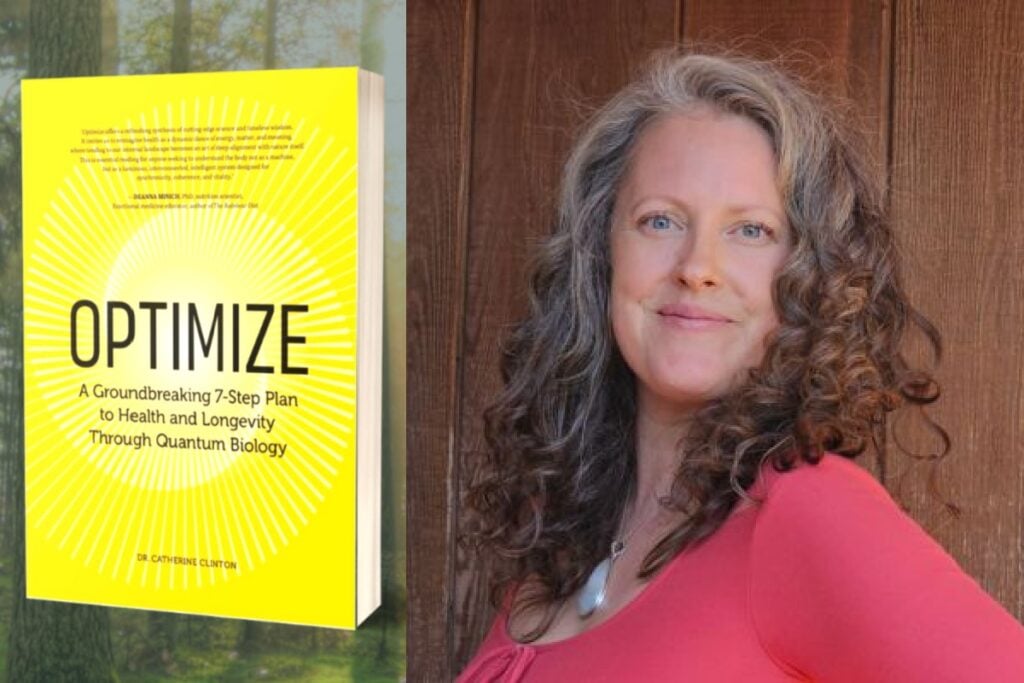
To learn more about Dr. Catherine Clinton’s work or to preorder her upcoming book Optimize: A Groundbreaking 7-Step Plan to Health and Longevity Through Quantum Biology, visit drcatherineclinton.com.
This interview originally appeared in our Winter 2025 issue.