
Morley Robbins on the Missing Mineral Behind Fatigue & Anxiety
If you’re feeling tired, anxious, or burned out (and not getting the answers you need) this conversation offers a refreshing perspective. Morley Robbins of The Root Cause Protocol shares how a missing mineral may be at the heart of what so many of us are feeling, and how supporting your body’s natural energy production can be the first step toward healing.
Morley received his BA in Biology from Denison University in Ohio and holds an MBA from George Washington University in healthcare administration. He has trained in wellness coaching, nutritional counseling, and functional diagnostic nutrition. He’s spent years unraveling the complex relationship between magnesium, iron, copper, and calcium to help people get to the root cause of their symptoms and start feeling better naturally.
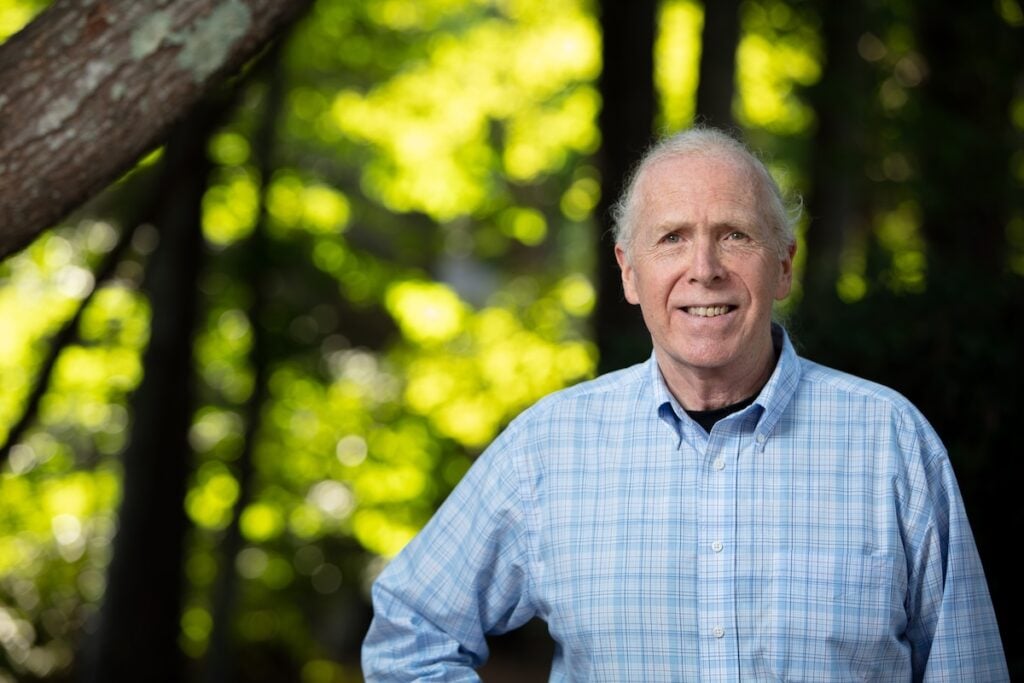
Our Interview with Morley Robbins
Amity: I’d love to start by giving our readers some background. I read in your book that you were in healthcare, but not a doctor. How did this all begin for you?
Morley: I grew up in a very sickly family. My sister became a nurse. I was supposed to be a doctor, but that wasn’t in the cards. I went into hospital management for 12 years, then into consulting to solve bigger problems. I’ve always been good at pattern recognition.
Back in 2008, I was doing a forecast for several hospitals in North Carolina, and every disease index was set to take off. It was frightening. I started in the ’70s when chronic disease was high, but this was something else. We were projecting what things would look like in 2025 – and here we are. The level of chronic conditions today is overwhelming.
Around that same time, I had a frozen shoulder. The folks at the health food store kept telling me, “Go see Dr. Liz” who was a chiropractor. My initial response was, “Thanks guys, but I don’t do witchcraft.” Eventually I went, and now she’s my wife. She’s the one who introduced me to a term I’d never heard in 30 years of working in hospitals: the innate healer.
And I thought: if we have an innate healer within us, why do we need 20 million doctors worldwide?
That started me on this path. I began noticing patterns in research. The biggest problem? Practitioners aren’t taught about minerals. And it’s not complicated. You know how a flashlight works, right? Minerals inside the battery allow electrons to flow. Our bodies work the same way.
Why Minerals Matter for Energy and Fatigue
Amity: So many people are dealing with fatigue, especially parents. Can you explain the mineral connection there?
Morley: When we can’t make energy efficiently, we get symptoms. If copper isn’t right, we can’t make energy, and that leads to fatigue. Meanwhile, we’re eating iron-fortified foods and taking iron supplements without a second thought. It’s part of daily life. But that excess iron is damaging our copper status, which affects our ability to make energy.
If copper isn’t right, we can’t make energy. And what’s the number one reason people go to the doctor? Lack of energy. What’s the number one nutrient deficiency on the planet? Supposedly it’s iron deficiency anemia… despite the fact that iron is everywhere: in our food, in the earth, in our bodies.
There’s only a tiny amount of copper in the body – kind of like the battery in your car. The car is made of steel (iron), but that little battery is crucial. Our mitochondria are the batteries of our body. And copper is the general running the show. Iron is just the foot soldier.
The body has a protein you’ve probably never heard of called ceruloplasmin. It’s the key protein that regulates iron in the body. But chances are, no doctor or nutritionist has ever mentioned it, even if you’ve been struggling with fatigue for years.
Iron, Copper, and the Mitochondria
Ceruloplasmin was first written about in 1948 by Swedish physiologists, and they thought they’d found the Holy Grail. It’s that important.
The average cell has around 500 mitochondria – and across the body, that adds up to about 40 quadrillion. When we’re under stress, the hormones released deplete copper, making it unavailable when we need it most. And copper is essential to the one mechanism that keeps us alive: turning O₂ into two molecules of water (H₂O). That reaction takes place inside the mitochondria, which act like water wheels – spinning and releasing energy into our tissues as they make water.
If that process breaks down, oxidative stress builds up instead. And that’s when symptoms appear. Open the Merck Manual and you’ll find 20,000 conditions. Nearly all start with a lack of energy.
The Iron Fortification Era and Why It Matters Today
Amity: You mentioned iron-deficiency anemia, but iron is added to tons of foods. Is it the problem a lack of balance in minerals we’re getting or because our soils lack minerals now?
Morley Robbins: During World War I, there was growing concern about anemia, so researchers began studying it more closely. At any given time, about 1% of the population is pregnant. In the first 20 weeks of pregnancy, iron levels remain fairly stable. But from weeks 21 to 40, a process called hemodilution kicks in. The volume of fluid in a pregnant woman’s body increases, which lowers hemoglobin levels – not because of iron deficiency, but because Mother Nature is shifting iron from the mother to the baby, where it’s most needed.
Iron disrupts breast milk production. What’s well established is that copper and retinol are far more important for making quality breast milk.
So during late pregnancy, it’s normal for hemoglobin to fall – from around 12 or 13 down to 8.5 or 9.5. And that’s exactly what British OB/GYN Philip Steer found when he studied 150,000 live births in 1995. The healthiest babies were born to women whose hemoglobin was in that 8.5 to 9.5 range.
But this study isn’t widely taught. Instead, we’ve labeled this natural process as anemia, and that’s where the confusion started. Then in 1941, they began adding iron filings to wheat flour.
Amity: Iron filings? Like tiny pieces of iron?
Morley: Yes.
Amity: How does the gut handle that?
Morley: Not well. It’s very disruptive. England, Canada, and the U.S. all adopted this. Then in 1969, the FDA proposed increasing the iron added to food by 300%. Scientists flew in from around the world with one question: “What are you trying to do? Kill people?”
So the FDA only increased it by 50%. But we still don’t know what the original baseline was. This is all documented in a book called Iron: The Most Toxic Metal by Canadian toxicologist Jym Moon, PhD. It’s a powerful exposé.
Nine different forms of iron are now being added to our food supply, and all nine have been linked to cancer.
There’s a global meme in medicine that says: you’re anemic and copper toxic. But the truth is the opposite. Copper has been deficient in our food system for 80 years, while we’re drowning in iron.
We need 25 milligrams of iron daily to make 200 billion red blood cells – but 24 of those milligrams come from blood recycling. Only about 1 milligram should come from food. Yet in the Western world, we’re getting 50 to 70 milligrams a day, mostly from fortified and processed foods.
Amity: Is that everyone, or people who eat mostly processed food?
Morley: Mainly people eating cereals, processed foods, and grains. But actually, some vegetables too. They’ve been hybridized to preferentially take up iron instead of copper. I was born in 1952, and back then, Popeye ate spinach because it was rich in copper. Today’s spinach has been bred for an uptake of iron instead.
Two studies in 1928 found that when animals were deprived of copper, iron quickly built up in their livers – a place you definitely don’t want excess iron. Thanks to farming chemicals, food processing, and the medications we take, most of us are now copper-deficient.
And that copper deficiency is often at the root of fatigue. Fatigue reveals underlying metabolic dysfunction. Iron builds up in the mitochondria, chokes off oxygen, and without oxygen, you can’t make water. And if you can’t make water, you can’t release energy. It really is that straightforward.
Copper Deficiency and Anxiety: The Hidden Stress Loop
Amity: Did I read that high iron levels can also increase anxiety and stress?
Morley Robbins: Absolutely. When you’re stuck in a chronic stress pattern, it disrupts your ability to make energy. Dr. Mark Hyman says stress is the body’s inability to make energy for the mind to respond to its environment. Resilience is about restoring energy so you can adapt. And the only reason iron becomes a problem is because copper isn’t available.
The design of the body is incredibly elegant. But it’s not taught in school or even on the internet. That’s why I created the Root Cause Protocol. I want to democratize healing and give people the tools to take control of their health.
The Root Cause Protocol and the Innate Healer
Amity: “Democratizing healing” is such a powerful term. Especially because so many habits that support health are free, like getting outside for natural light and Vitamin D.
Morley: That ties right in with my wife’s concept of the innate healer. And you’re right. But the challenge is, many women today don’t have enough minerals even for their first pregnancy, let alone the second or third. You lose about 10% of your mineral mass with each child. And copper has been missing from our diets for decades. That’s what the protocol aims to correct – getting magnesium and copper back into the body through real, nutrient-dense food.
Amity: Let’s talk about the spleen and liver. In women, these can be vulnerable due to monthly bleeding and stress. How does mineral imbalance affect them?
Morley: The spleen is your blood filter. It removes 2.5 million red blood cells every second. And when copper is low, iron can’t be recycled properly, it gets stuck, especially in the spleen. Under stress, the spleen can swell dramatically – up to 16 times its normal size. That iron build-up leads to dysfunction.
It all comes back to this copper-iron dynamic. Copper is the general; iron is the foot soldier. And we have to ask: where are we getting copper in our diet?
Lifestyle Changes and Supplements
Amity: Do most people need to supplement copper?
Morley: Yes, but it’s not just about adding copper. We offer a free 11-page Starter Guide at The Root Cause Protocol. It outlines what to stop taking, what to start, and how to pace yourself so it’s sustainable. The very first thing we recommend stopping is iron supplements.
Amity: Is there anything to know specifically for women?
Morley: The female body is designed for monthly blood loss until menopause. When cycles stop prematurely (birth control, stress, diet changes), iron builds up. For anyone not menstruating – men or women – we recommend regular blood donation. Twice a year if you’re still cycling, and four times a year post-menopause. That blood loss is one reason women tend to outlive men. Their iron levels are regulated naturally.
Releasing Fear, Reclaiming Energy
Amity: Earlier you mentioned the connection between stress and mineral imbalance. Can you share more about how to mitigate that stress?
Morley: At the root of stress is fear – especially the fear that your body is broken. And when you believe that, it changes your mineral status. That’s why we strongly recommend emotional release work like EFT, the Emotion Code, or Integrative Processing Technique. Talk therapy can be helpful, but it doesn’t usually release the fear from the body.
You really need a practitioner to guide you through it. Because once stress becomes chronic, it disrupts the iron recycling system. Iron gets stuck, symptoms build, and you’re back in that vicious cycle. Doctors rarely ask about stress. They don’t ask about your diet. They never mention copper or retinol. And then they prescribe more iron, which makes things worse.
The bottom line is: if copper is low and retinol is low, few things stress the body more. But when you restore those minerals and support the body’s ability to make energy, healing can begin.
Reconnecting to Your Body’s Natural Wisdom
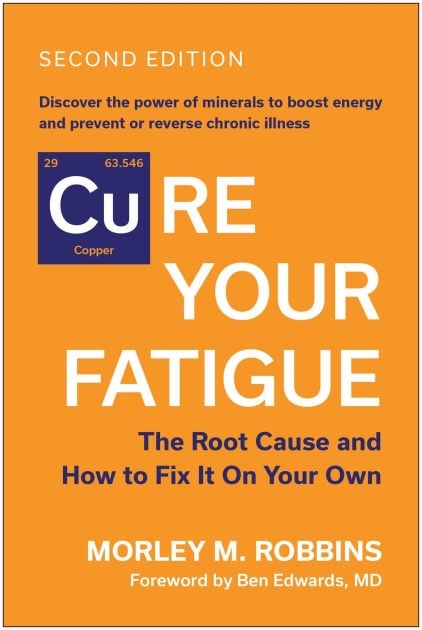
If you’ve ever felt like your body was working against you, Morley Robbins’ new book, Cure Your Fatigue is a worthwhile read.
By supporting your natural energy production through mineral balance, nourishing food, and emotional healing, you can start to feel like yourself again by helping your body remember how to heal.