
How to Choose a Safe, Waterproof Crib Mattress for Your Baby
A wet crib mattress is one of the last things a sleep-deprived parent needs during a 2 a.m. feeding or back-to-sleep pat. Changing baby’s clothes is enough of an ordeal, but trying to soak pee up from a mattress in the middle of the night can tip a mama straight into overwhelm territory.
A waterproof crib mattress can make those inevitable messes much easier to manage. And as we’ve shared over the last 15 years of reviewing baby gear, convenience is only part of the equation. You also want to feel confident about the materials your child sleeps on, how the mattress supports their growing body, and whether it meets safety standards.
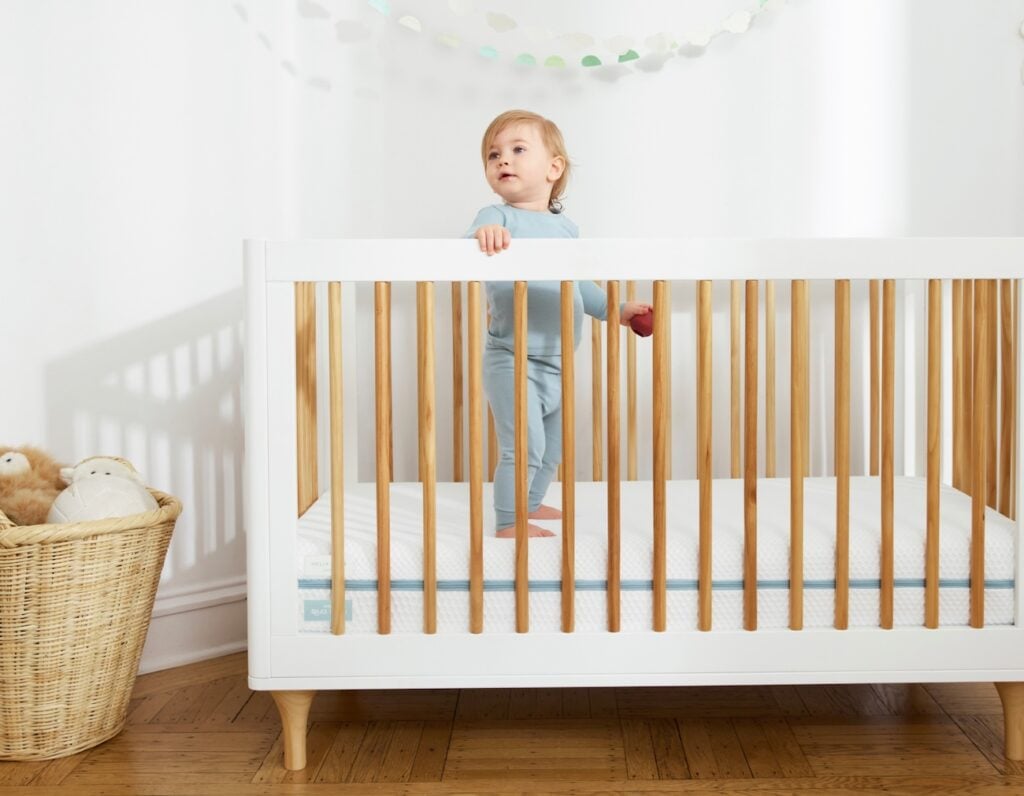
Fortunately, waterproofing and thoughtful mattress design can go hand in hand. Options like the Helix Crib Mattress combine moisture protection with features designed to make everyday care easier.
Here we’re looking at what matters most when choosing a safe, waterproof crib mattress, from the materials beneath the cover to the features worth considering before you buy.
Why Waterproofing Matters in a Crib Mattress
While washing crib sheets is relatively straightforward, cleaning soaked liquid from a mattress itself is another story.
When moisture reaches the inner layers of a mattress, it can be difficult to remove completely. Trapped moisture can contribute to lingering odors and sometimes mold or mildew growth. A waterproof barrier helps protect the mattress core, making it easier to keep your baby’s sleep space clean.
Some crib mattresses have a waterproof surface that can be wiped clean, while others use removable covers or barriers that protect more of the mattress. A separate waterproof mattress protector is another option, provided it fits securely and doesn’t interfere with the mattress’s firmness or the fitted sheet.
What Makes a Waterproof Crib Mattress Safe?
A waterproof crib mattress needs to do more than keep liquids from soaking through. Its construction, firmness, fit, and materials all play a role in creating an appropriate sleep surface for your baby.
Understand the Waterproofing Materials
Waterproofing is often achieved through a thin barrier or coating that prevents moisture from reaching the mattress interior.
Polyethylene (PE) is a type of plastic sometimes used as a waterproof barrier in crib mattresses. It can provide moisture protection without relying on PVC or added plasticizers, although the specific construction and any additional treatments still matter.
Polyurethane (PU) is commonly used in thin waterproof membranes, including those found in mattress covers and protectors. These flexible barriers can help prevent liquids from passing through while keeping the cover comfortable. Polyurethane waterproofing membranes are different from polyurethane foam, which may be used in the mattress core.
PVC (vinyl) is another waterproof material, but it’s worth looking more closely at its formulation. Some flexible PVC products contain plasticizers, including certain phthalates, to make them softer. Not all vinyl products contain restricted phthalates, so material disclosures and testing are more useful than assumptions based on the word “vinyl” alone.
Parents may also want to ask whether a mattress uses PFAS-based stain-resistant or water-repellent treatments. These aren’t necessary for every waterproof design, and a manufacturer should be able to explain how its waterproofing works.
Beyond the material itself, consider how much of the mattress is protected. Some designs have a waterproof sleeping surface but leave the sides or seams more vulnerable to spills. Others use full-coverage waterproofing intended to prevent moisture from reaching the core, even when liquid travels beyond the top surface.
For a closer look at what may be hiding inside a crib mattress, see our guide to crib mattress materials, VOCs, PFAS, and flame retardants.
Firmness and Proper Support
A baby’s mattress should be firm, flat, and supportive, even if it feels harder than the mattress you’d choose for yourself. Infants don’t yet have the strength or mobility to reliably reposition themselves if their face becomes pressed against a soft surface. A mattress that sinks or conforms around their head and face can increase the risk of suffocation.
The American Academy of Pediatrics (AAP) recommends placing babies on a firm, flat, non-inclined sleep surface that meets current safety standards. The mattress should also fit snugly inside the crib, without gaps where a baby could get stuck.
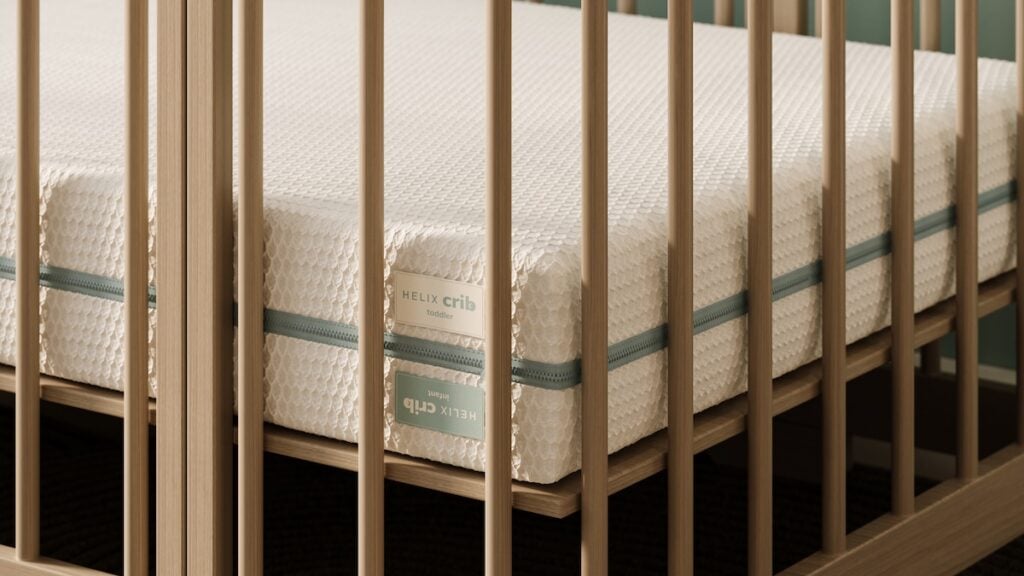
As children grow, their sleep needs change. Dual-sided options, like the Helix Crib Mattress, have an extra-firm infant side and a slightly softer, supportive toddler side. This allows families to continue using the same mattress as their child grows, rather than purchasing a replacement.
With a flippable mattress, use the infant side until your child reaches the manufacturer’s recommended age or developmental milestone for switching.
Understand Breathability Claims
You’ll see the word breathable on plenty of crib mattress labels, but there’s no uniformity to this term.
Some manufacturers use the term to describe a mattress cover that allows air to circulate, while others refer to the construction of the mattress itself. Certain fabrics and open-weave designs may encourage airflow or help with temperature and moisture management, but those features don’t necessarily mean air can pass through the entire mattress.
Breathability is different from infant sleep safety. While airflow and temperature regulation are reasonable features to consider, there’s no convincing evidence that a mattress marketed as breathable reduces the risk of SIDS. The safest approach is still to follow established sleep recommendations: baby on their back, using a firm, flat mattress, and no loose bedding and soft objects in the crib.
Check Safety Testing and Certifications
Safety certifications can offer helpful reassurance when you’re comparing crib mattresses, but not all certifications evaluate the same things. Some address physical safety requirements, while others focus on chemical emissions or specific materials.
In the United States, crib mattresses must meet the federal safety standard 16 CFR Part 1241, which includes requirements for firmness, dimensions, and other safety considerations intended to reduce suffocation and entrapment hazards. This is a mandatory standard, not an optional certification or premium feature.
Beyond those requirements, you may encounter voluntary third-party certifications such as:
- GREENGUARD Gold: Tests products for emissions of certain volatile organic compounds (VOCs), helping parents identify mattresses that meet established low-emission limits. It doesn’t mean every material in the mattress is organic or completely free of chemicals.
- CertiPUR-US: Applies specifically to flexible polyurethane foam. Certified foams must meet requirements for certain chemical substances and VOC emissions. This certification covers the foam, not necessarily the entire finished mattress.
Beyond materials and safety standards, think about how the mattress will hold up to everyday use. Is the cover easy to remove and wash? Can you purchase a replacement? Will the mattress maintain its shape and firmness over time? These practical details are worth considering, especially if you plan to use the mattress through the toddler years.
A Closer Look at the Helix Crib Mattress
The Helix Crib Mattress is designed to make some of the messier stages of babyhood and toddlerhood easier to manage.
One of its standout features is the Easy Airflow Cover, which offers full-coverage waterproofing rather than protecting only the top surface. The removable cover has a three-dimensional honeycomb weave designed to encourage airflow, while the waterproof barrier keeps moisture from reaching the foam core.
Helix calls its cleanup process the 2-Minute Crib Reset. If your little one has an overnight accident, you can unzip the soiled cover, replace it with a clean one, and toss the dirty cover in the washing machine. An extra cover is available separately, which could be especially handy during those early months when middle-of-the-night changes seem endless.
Helix worked with pediatric sleep specialists and parents to develop a dual-sided mattress, with an extra-firm infant side and a firm toddler side. It’s constructed with fiberglass-free polyurethane foam, and Helix reports that its design follows American Academy of Pediatrics firmness guidance.
The mattress also features CertiPUR-US certified foam, GREENGUARD Gold certification for low chemical emissions, and an OEKO-TEX STANDARD 100 certified cover. It’s crafted and assembled in Arizona. You can explore the crib mattress and other sleep products at Helix Sleep.
Waterproof Crib Mattress Buying Checklist
Before choosing a waterproof crib mattress, run through these questions to make sure you’re considering both safety and everyday practicality.
- Firmness and fit: Is the mattress firm, flat, and appropriately sized for your crib, without gaps around the edges?
- Waterproof protection: What material creates the waterproof barrier? Does it protect the entire mattress core or just the sleeping surface?
- Safety standards: Does the mattress meet current federal crib mattress safety requirements?
- Materials and certifications: Are the materials clearly disclosed? Does the manufacturer provide relevant testing or third-party certifications to support its claims?
- Cleaning and care: Can the mattress be wiped clean, or does it have a removable, washable cover? Are replacement covers available?
- Long-term use: Will the mattress maintain its firmness and support over time? If it’s dual-sided, are the infant and toddler sides clearly labeled?
Taking the time to understand your crib mattress options is worth it. Your future 2 a.m. self will appreciate the easier cleanup, and you’ll have peace of mind knowing you’ve chosen a mattress with your baby’s safety and healthy development in mind.