
Is EVA Foam Toxic?
EVA foam padding is a popular choice for play mats for babies and toddlers. They come in various styles, click together like puzzle pieces, and make a soft area for young children to play on. As a parent with concerns about chemical exposure, read on to learn if EVA foam is toxic.
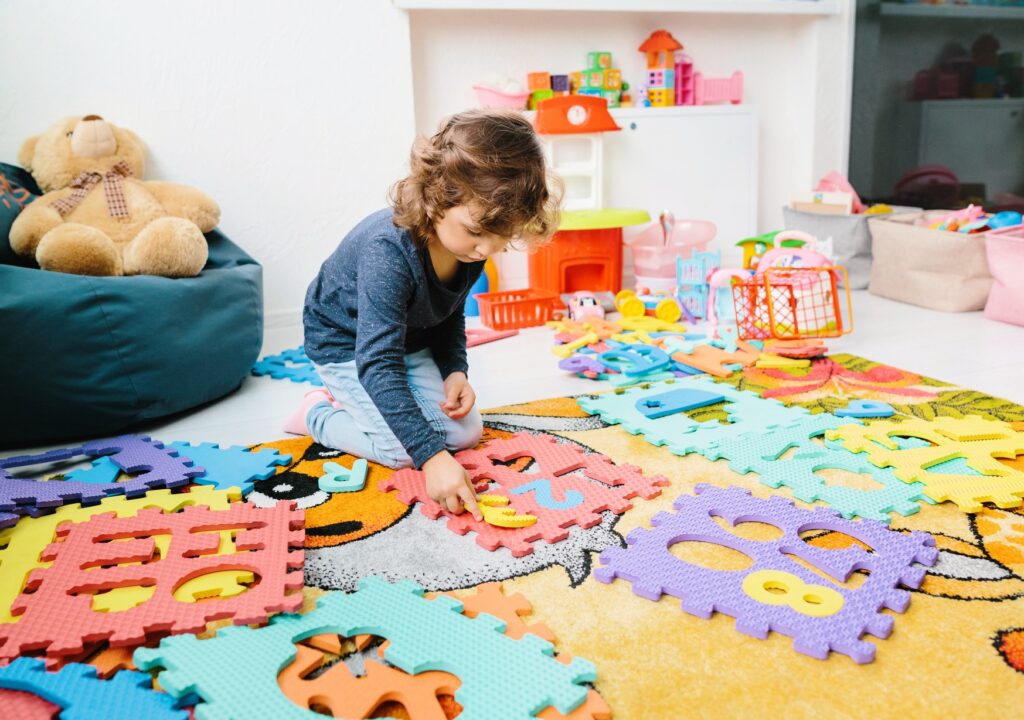
EVA stands for Ethylene-Vinyl Acetate, a type of foam with a rubbery texture similar to that of a yoga mat but with less give. It is a durable material that feels soft and doesn’t crack easily.
EVA padding is popular for making cosplay costumes, crafts, and sports equipment. It’s also become quite popular as play mats for babies and children and is considered a safe option by many.
Is EVA Foam Toxic?
Short answer: EVA foam itself is generally considered lower risk than PVC foam because it doesn’t require phthalate plasticizers. However, some EVA foam products have historically contained formamide, a manufacturing chemical that can off-gas.
While regulations have reduced this concern in Europe and many manufacturers now advertise formamide-free products, independent testing varies. If you’re trying to reduce your family’s overall chemical exposure, there are natural play mat alternatives made from organic cotton, natural latex, cork, or wool.
EVA Foam Safety
A chemical called formamide is used during manufacturing to make EVA padding pliable. Formamide is a carcinogen, and it does off-gas. So babies and toddlers playing on EVA foam mats are exposed to formamide in the air they breathe, and they can absorb it through their skin.
In 2010, France temporarily suspended the sale of some EVA foam puzzle mats after testing found elevated formamide emissions. The action prompted tighter European oversight, and today manufacturers selling children’s products in the European Union must comply with strict chemical safety regulations, including REACH and the Toy Safety Directive.
Products made from EVA foam must now comply with the REACH Regulation (Registration, Evaluation, Authorization and Restriction of Chemicals) and the Toy Safety Directive in the EU.
Reducing Chemical Load
If you are concerned about reducing your family’s body burden of toxic chemicals, doing what you can to stay away from formamide use in EVA foam is a good idea.
The EU Chemicals Agency has found high levels of formamide emissions from foam mats in a study that provided relevant information calling for further assessment of children’s exposure to indoor air pollution from foam mats.
However, other studies have shown that the chemical outgassing of formamide drops off quickly, so any amounts conceivably inhaled by children playing on EVA foam mats are so low that they could not cause any health issues.
It’s hard to know what to think exactly, and while I tend to avoid freaking out about nothing, this is very unclear. In an effort to detox my home, I prefer to choose options that are known to be toxin-free.
Formamide is a toxin that, in high doses, can potentially cause reproductive or developmental harm. This concern, paired with other play mat options, leads me to believe that it’s best to choose something else besides an EVA foam play mat for babies and toddlers until there is more clear evidence that it is safe.
EVA Padding Concerns
The concerns about EVA foam padding shouldn’t be ignored. When we consider the amount of time babies might spend directly exposed to formamide off-gassing, the possible risks aren’t worth it when there are other options.
Babies spend many hours during their first year on play surfaces during tummy time, rolling, crawling, and play. Because this stage involves close and prolonged contact with the floor, many families choose materials with the lowest possible chemical emissions whenever practical.
There are other, safer options to use instead of EVA foam mats. Given the ease of alternatives, or even using a quilt or blanket, choosing not to use these mats is the best way to avoid possible adverse side effects on our children’s health.
Is EVA Foam Better Than PVC?
Here’s a quick guide to materials commonly found in baby toys, crafts, costumes, and play mats.
| Material | Main concern |
|---|---|
| EVA | Possible formamide in some products; VOC emissions vary |
| PVC | Often contains phthalates and other plasticizers unless specifically formulated otherwise |
| Natural latex | Natural material but latex allergy consideration |
| Organic cotton | Very low concern; less cushioning |
| Cork | Renewable, durable, naturally antimicrobial |
Non-toxic EVA Foam Mats
Some companies tout that their EVA foam play mats for babies and toddlers are formamide-free. I’ve read that it is possible to make EVA padding without formamide. However, I’m unsure what else they might use to create the foam’s pliable nature.
Some sources I’ve read say that making EVA foam without formamide is possible. Others say that they all use formamide but that if it’s in low enough amounts, they can say it’s formamide-free.
These foam tiles seem like safer choices for non-toxic EVA floor mats. It’s always a good idea to research and do what feels right for you and your family.
FoamTiles certifies that its kid-safe EVA padding tiles are non-toxic, allergen-free, lead-free, formamide-free, BPA-free, and fire-retardant-free. This company has all its EVA foam products third-party tested to ensure their safety.
Soft Tiles are formamide-free, non-toxic, and free of BPA, phthalates, latex, and fire retardants.
EVA Playmat Alternatives
There are some great alternatives for non-toxic play mats that are safe bets instead of EVA foam mats. This list of the best non-toxic baby toys recommends a few safe mats along with other non-toxic toys for babies.
Toki Mats are beautiful organic play mats. They are GOLS-certified organic or Okeo-Tex-certified non-toxic. Their foam inserts are made from all-natural latex foam derived from tree sap.
Piccalio play mats have foam inserts made from rubber trees and organic cotton. The materials they use are also GOLS-certified organic or Okeo-Tex certified non-toxic.
This non-toxic cork floor mat is for yoga but works great for a toddler play area. It is easy to clean and provides perfect grip and padding for toddlers.
More on Safe Toys for Babies and Kids
These articles offer more advice and ideas about choosing safer toys and baby care items. And you can stay up to date with all the latest on natural parenting when you subscribe to Green Child Magazine.
Are Plastic Toys Safe?
PVC in Toys
Eco-Friendly Gifts for Kids
Eco-Friendly Gifts for Babies
Are Battery Toys Bad for Babies?
How to Set Up a Montessori Playroom
How to Avoid Toxic Chemicals in Toys
Why Children Need Open-Ended Play
Why and How to Choose Battery Free Toys
As with many environmental health topics, researchers continue studying long-term exposure to low levels of manufacturing chemicals. Because babies spend so much time in close contact with their play surfaces during tummy time, crawling, and play, many parents choose materials with the fewest unnecessary chemical additives whenever practical.