Kate Northrup Relaxed Money Review: My 1-Year Experience
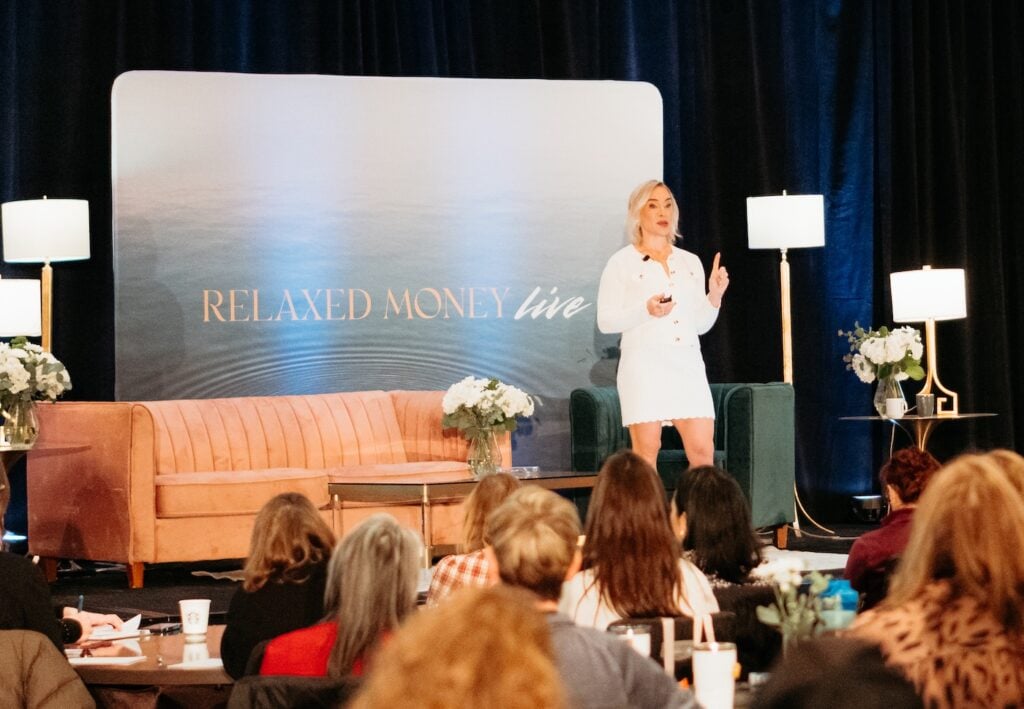
After spending the last year in the Relaxed Money program, I wanted to share an honest review for anyone who feels curious or cautious. Here’s a look at my experience and the answers to some of the questions I’ve gotten about the program.
Everyone has financial ups and downs. Just like most flowers aren’t constantly blooming, our money also moves through seasons. Sometimes those uncertain times or fallow periods come from choices we’ve made, and sometimes they arrive through circumstances outside of our control.
Similarly to many publishers who have experienced challenges over the past few years, in 2024 I found Green Child in the same boat. Changes in how search engines operate, tighter budgets among advertisers, and the overall noise online have caused many publications to decline or scale back.
It’s one example of how you can be responsible — or even doing “pretty well” — and still experience an upheaval that shifts your confidence and creates fear around finances.
You can learn more about Relaxed Money or sign up for the waitlist here.
Having been part of a mastermind with Kate from 2019 to 2022, I already trusted her advice. I’ve also continued listening to her podcast over the years, returning to her perspective when I needed a reminder that there’s another way to approach time, energy, and money. If you’re new to Kate’s work, you can also read our earlier interview where she shares her philosophy on time, energy, and living in alignment with natural rhythms.
Even so, I sat on the decision to join Relaxed Money for two years before actually signing up. What drew me in was the idea that our relationship with money is both practical and deeply connected to our nervous system.
What is Kate Northrup’s Relaxed Money program?
Relaxed Money is Kate Northrup’s guided money program designed to help you change not just how you manage money but how money feels in your daily life.
It blends:
- practical financial structure (systems, organization, clarity)
- nervous system regulation (so money doesn’t feel activating or overwhelming)
- mindset and pattern awareness (so you can recognize what’s actually driving your decisions)
Many people start with her free 3-day workshop, Good with Money, which lays the foundation for her approach.
From there, Relaxed Money is where you actually build the systems and practice the tools in a supported way. These changes aren’t just conceptual, but something you can live with day to day.
Is Relaxed Money practical? Or mostly mindset work?
I’ve been asked whether Relaxed Money is a practical program or more of a mindset course, the answer is: it’s both. And in my experience, that’s exactly why it works.
If you’ve done a lot of inner reflection or spiritual work around abundance, you may start to believe that looking too closely at money is too restrictive — or not aligned with “going with the flow of the Universe.”
That’s the space I found myself in over the last decade. And in my mind, it seemed to work because I was doing fairly well financially.
But when things started to shift, I went into full-on avoidance. The advice “what you focus on expands” made me think that if I looked too closely at numbers that weren’t where I wanted them to be, I might create more of what I didn’t want.
From there, the avoidance itself became a nervous system trigger.
I’d been smart and responsible with money my whole life, so this wasn’t a longstanding pattern or childhood belief. It was a new fear: look how easily everything you’ve worked for can slip away.
I didn’t actually know what I needed to do to fix it. But I knew it wasn’t another budgeting system or anything that required more hustle. So, the first time I heard Kate talk about the nervous system in relation to finances, I knew that was part of the puzzle for me.
She explained that if your body doesn’t feel safe with money, you might repel it, spend it unnecessarily (often as a form of avoidance), or even sabotage it without realizing it. That resonated more than I expected.
I wasn’t feeling confident enough to trust myself. And the avoidance and low-level worry were taking up so much bandwidth, I didn’t have the energy or focus to take a clear, practical look at what was actually happening.
The Nervous System Component to Relaxed Money
Kate’s approach doesn’t treat nervous system healing and practical money stewardship as opposites. She brings them together.
The nervous system piece helps you understand why money can feel so activating in the first place — and why avoidance can become such a powerful pattern.
And from there, the practical side gives your money somewhere to go.
For me, that combination was key. It wasn’t just “think better thoughts about money,” and it wasn’t just “open a spreadsheet and be more disciplined.” It was a more honest and sustainable blend of emotional safety and practical structure.
Another helpful reframe is to think about your finances the way you would think about a relationship you want to strengthen. You wouldn’t avoid someone you loved, ignore them for weeks, and then hope they’d be there for you when you needed support. You would nurture that relationship and show up consistently to create safety and trust over time.
What this work helped me see is that those patterns are more about protecting yourself than having discipline. And when something doesn’t feel safe in your body, it’s very hard to build a steady, supportive relationship with it.
Why This Work Matters
Dr. Louann Brizendine shares a study in her book The Female Brain involving mother monkeys that revealed something profound about safety and resources. Researchers divided mother monkeys with their babies into three groups:
- One group received abundant and consistent resources daily
- One group received limited but consistent resources daily
- One group received unpredictable resources (abundant some days, scarce others)
The study showed the first two groups (abundant-resource and limited-resource mothers) were able to care for themselves and their babies effectively. Essentially, as long as the resources came consistently, both of these groups thrived.
The mothers with unpredictable resources, however, struggled significantly with self-care and caring for their young. The lack of knowing what would happen next was so detrimental, they stopped the study early for ethical reasons.
So it turns out, the amount of resources wasn’t the key. Predictability was. This study illustrates why consistency helps our nervous systems feel safe, even when resources aren’t abundant or we are in an unfamiliar situation. This study is one reason why I’m so passionate about the Relaxed Money program.
Kate teaches that financial safety isn’t about having unlimited resources, but more about creating predictability with the resources you have. Whether you’re in a financial rebuilding phase or you’re abundant, the practice is the same: know what you’re spending, plan for it, and trust the rhythm.
That’s what makes your nervous system feel safe enough to actually show up for your life, your kids, your business, or your relationships. Through Relaxed Money’s spending plans, cycle syncing your money, and nervous system practices, you get to develop that level of consistency for yourself.
Relaxed Money Reviews
Because it also helped me to see how this program worked out for others, here’s a look at a few testimonials from Relaxed Money students.
“My personal bank account has gone from often overdrawn to now a consistent balance of $6K each month. This is the first time I’ve ever shown up for my business numbers like this. I’m now consistently paying myself a paycheck for the first time in 6 years. It feels so good to do it from a stance of abundance vs. scarcity. I’ve started doing Friday money dates with my husband, and we’ve turned back on our retirement savings after 3 years of a break.” – Wendy Snyder, Founder of Fresh Start Family (You may recognize Wendy from our connection based parenting interview. I met her through the program.)
“As a result of the tools I learned in Relaxed Money, I took action and received $150,000 cash from renegotiating the terms of one of my assets. I’ve cleared $78,000 (of debt), and I’ve put the remaining money into my long term investment funds, PLUS a high-interest savings account to cover three months of expenses. This all happened within months of joining Relaxed Money.” – Joy Asibey-Gabriel
“When I joined RM I was in a horrible job and filing for bankruptcy. After that, I quit the job, gave myself a 25k raise in a new job. After only 6 months they gave me my full bonus early and a 5% raise. I’m finally feeling like I’m back to my relaxed self to start my business back up again. I managed to save $10,000 and have been committed to not spending it.” – Patty Alfonso
“My business nearly doubled what we made over Christmas despite what was happening in the U.K. economy. My husband and I stopped fighting about money. We couldn’t even talk about it and he was in total avoidance. We are a team in Abundance now and my husband supports my business, which used to be a source of tension in our marriage. Relaxed Money didn’t just save my business, it saved my marriage.” – Saadia Baig – CEO, Haven Wellness
“I’d participated in Kate’s Good With Money workshop last year and thought I could put all of it into practice on my own. It helped me make real progress from a stress around money standpoint, but I was missing all of her practical advice. I even tried loading what I learned from GWM into an AI model, but it doesn’t know what it doesn’t know! Stepping into the program this year was a huge YES, and I’ve been reaping benefits like lower IBARs (debt), a better credit rating, having a LOT more fun with my financials, and a profit increase in my business. I do weekly money dates by myself and monthly with my partner. We’re no longer ‘armoring up’ before we have a money discussion. I’m so proud of myself!” – (I met this student at Kate’s event in Nashville and she requested to remain anonymous.)
My Personal Experience
One of the first things I noticed was that, after using the nervous system regulation tools, I stopped feeling scarcity energy when I looked at my bank accounts. Now it’s just more neutral (as in gathering information) when I look.
That neutrality has created space for me to make more clear and practical decisions that are positively impacting my finances… without that underlying tension.
I also started to recognize my patterns more clearly — especially in conversations about money with my husband. I always do a nervous system regulating tool before a money conversation, and it really works. Now we both feel more collaborative and less defensive.
Overall, money feels less activating. I’m able to pay more attention to the details, because my body isn’t going into fight, flight, or freeze. And because I’m out of avoidance, it’s not draining my energy in the background.
Practical and Emotional Wins
In addition to these shifts, we’ve also increased our cushion fund (what Kate calls a “soft place to land”) to cover six months of expenses. Framing it as a cushion rather than an emergency fund helped me focus on stability and support rather than fear or scarcity.
Through one of Kate’s exercises called the Expense Edit, I found about $280 per month in spending that I could redirect more intentionally.
My husband and I also found where we were getting double charged for a streaming service we’d accidentally created two accounts for. I remember feeling so sorry for an older family member who had been paying for two Netflix accounts for two years, so this was kind of an embarrassing win. The charges were hitting two different cards. Without the strategic scrutiny Kate recommends, I’m not sure when we’d have caught it.
I’ve also put a simple system in place to review my numbers every other week, beginning with a two-minute nervous system regulation practice.
Community and Connection
One unexpected gift of the program was finding a treasured new friend. What began as accountability buddy turned into a meaningful friendship. We shared a hotel at Kate’s live event this year. It’s a reminder that financial growth doesn’t have to happen in isolation.
My accountability partner has experienced major shifts like
- finding the ideal part-time job to support her as she grows her business (previously she was struggling to make ends meet and putting too much pressure on her new business)
- went from dreading looking at her financials to texting me things like, “Went through all my accounts and recorded what was there…. It was super easy and I was done before I knew it!”
- removing some long-held scarcity views
We attended almost all of the live sessions. And we still meet most Fridays over Zoom to discuss the material, finish up our homework, share other inspiration we found that week, or bounce business ideas off of each other. Occasionally, we whine and complain about the world, but we don’t drag it out. And we always do a nervous system healing tool to metabolize any stuck energy.
Income Growth
Beyond the huge benefits of clarity and nervous system healing, I’m extremely happy to share that my income has increased over last year.
Some of the growth is likely due to what Sarah Tacy (the nervous system healing specialist you get to work with in RM) calls the Reticular Activating System. When we’re in a dysregulated state, our peripheral vision narrows. Sometimes we can’t see opportunities around us because we’re so focused on the danger of the present moment.
The day after a really powerful call with Sarah, I was in the car and kept asking my husband things like, “Has that neighborhood always been there?” and “Where did that hotel come from?” I think my brain had been closed off to new things because it was in survival mode.
Why I Will Continue to Do This Work
One of the reasons I chose to participate in Relaxed Money is the lifetime access to the modules. Some people rejoin the live cohort each year for the community and accountability.
I will likely join again because Kate is one of those people I love to stay plugged into. Her perspective is a nice mix of refreshing, helpful, optimistic, and practical.
Either way, I will continue to engage with the material. I worked through almost all of the modules in the last year, and I’m excited to go deeper now that my nervous system is better calibrated to handle it. Also my accountability buddy and I have already committed to another year of our weekly calls.
A Meaningful Investment
If you’re already drawn to Kate Northrup’s work, there’s usually a reason. And if you’re considering Relaxed Money, you might recognize the avoidance or the sense that you’re doing “well enough” but still don’t feel confident in your ability to steward money.
This is a meaningful investment and not something I rushed into. As I mentioned, I stayed curious about it for two years before joining. But one of the things that helped me reframe it was realizing how small shifts can add up quickly. The monthly $280 I freed up by doing the Expense Edit has more than covered the cost of the program over the course of a year. And beyond that, the clarity and calm I’ve gained have been just as valuable.
If you’re curious but not ready to commit to the full program, the best place to start is Kate’s free 3-day workshop, Good with Money. It gives you a feel for her approach and can help you see whether this kind of work resonates with you.
And if nothing else, I hope this review helps you feel a little more grounded as you think about your relationship with money. If you have questions, feel free to ask in the comments or send me an email.
*If you join using the link in this review, Green Child will earn a commission. We only share services or products we’ve tried ourselves and would recommend to our friends and family.