
How Asheville’s Period Nirvana Shop is Redefining Menstrual Care
I’ve watched my friend Kim Rosas evolve from a cloth diaper expert into one of the most trusted voices in reusable period care. This year, she expanded her online shop, Period Nirvana, into a gorgeous new store in Asheville dedicated to holistic menstrual health. It was a delight to attend the store’s grand opening and interview Kim.
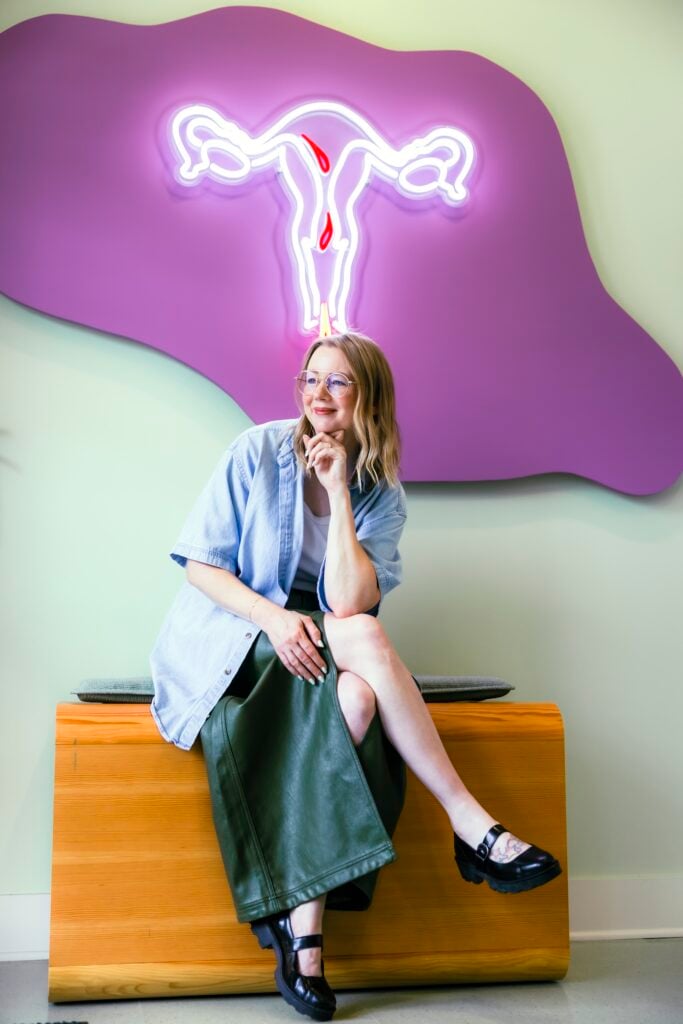
Kim Rosas Shares All About Asheville’s First Holistic Period Care Shop
In our interview, Kim explains how the new store redefines period care with reusable products, community workshops, and even a mini menstrual museum.
Amity: What made Asheville the right home for Period Nirvana?
Kim Rosas: Asheville felt like the right city for us. It’s a vibrant town that supports small business and has a community that embraces an eco-friendly lifestyle. We love being part of this community and have felt welcomed from the start.
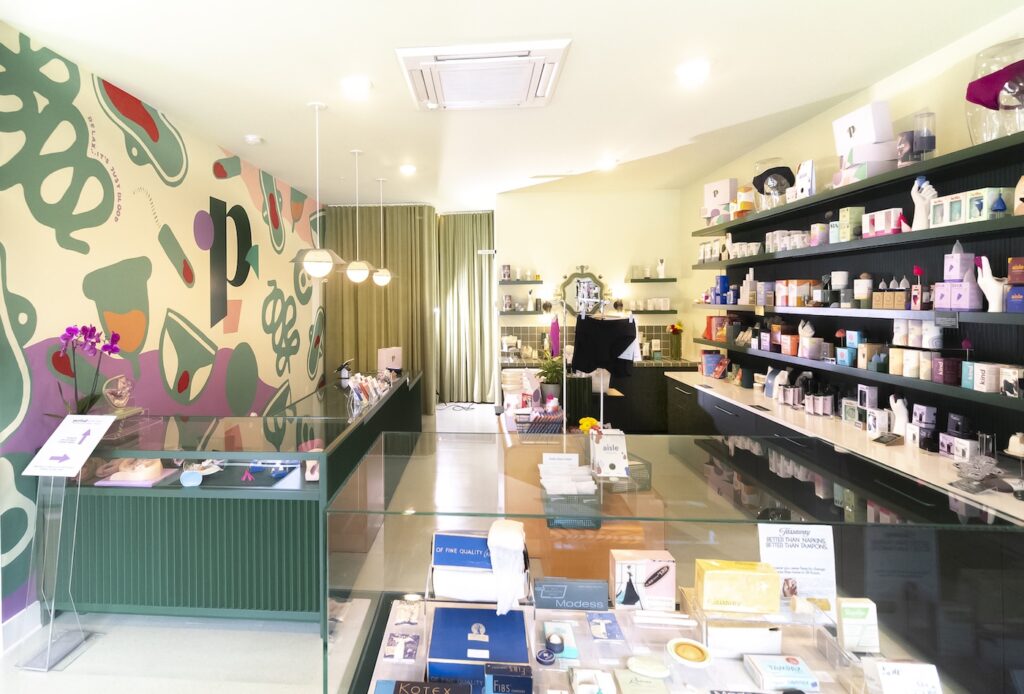
Amity: The shop is so bright and inviting (not commercial or clinical). What kind of environment did you want to create?
Kim Rosas: The interior design was based on our online store’s color scheme and textures. All of it is rooted in inclusivity and warmth. I want everyone to feel welcome in Period Nirvana spaces.
Kim’s Path to Reusable Menstrual Care
Amity: You’re certainly a pioneer in menstrual cup and disc education. What led you to this work?
Kim Rosas: In 2012 I tried a DivaCup. It was my attempt to cut down on my personal product waste. I was a skeptic but before my first cycle was through, I already felt called to tell everyone I knew about how much better a cup was for my cycle compared to tampons.
At the time I had a blog about cloth diapering and I decided to write an article about my first experience using a cup. It struck a chord and received a huge response. As I’d done before with cloth diapering education, I shared my lessons learned about using cups online via my blog and YouTube. Things just grew from there. It’s very fulfilling work.
Amity: Our readers tend to be equally concerned with personal health and the environment. How are reusable menstrual supplies more beneficial to health and the planet?
Kim Rosas: Switching to reusable period care (external or internal) often results in a more comfortable period. This is especially true for people switching from tampons. High-quality medical-grade silicone is a safer and healthier option compared to tampons, and it has a much lower risk for TSS.
Many cup users report shorter cycles, lighter flow, and even less cramping. Some also experience fewer instances of vaginal dryness and irritation, since cups and discs don’t disrupt the vaginal microbiome the way tampons can. Unlike disposable products that may contain unknown additives, fragrances, or bleached materials, reusables offer peace of mind with fewer materials in contact with sensitive tissue.
They’re also ideal for people managing chronic conditions like endometriosis or pelvic floor dysfunction – offering better comfort, reduced waste, and fewer product changes. Cups and discs can be worn longer than tampons or pads (up to 8–12 hours), which also makes them convenient for travel, sleep, or busy days.
From an environmental standpoint, the benefits are huge. Cups and discs can last up to ten years, which means most people can avoid using more than a thousand pads or tampons in that time – significantly reducing plastic waste and product packaging.
Taking the Fear and Judgment Out of Periods
Amity: I’ve watched you interact with hundreds of people at workshops and in your store. There’s always someone who’s embarrassed to ask questions, and always put them at ease. How did you get comfortable talking about a sensitive topic?
Kim Rosas: I ask myself this question often. For some reason, I find it easier to talk about uncomfortable subjects with strangers than making small talk. Discussing periods and bodily fluids is easy. But ask me to tell you about my day, and I get all flustered. Practice certainly helps, but I think this line of work came naturally to me.
Amity: So many people want to try a menstrual cup or disc but feel intimidated. What advice can you give to someone who is nervous about getting started?
Kim Rosas: I own a store, so my joke advice is: just buy one. But honestly, it’s great advice. I tell customers their purchase will just sit in a drawer unless they work up the courage to try it.
I also remind people that vaginas are designed to stretch, and a little ol’ cup isn’t that scary compared to everything else going in or coming out. It’s a bit crass, but it helps people put the size into perspective, which is often half the fear.
Amity: Many of our readers are parents of tweens and teens. What advice would you give to parents who want to introduce reusable products in a positive, pressure-free way?
Kim Rosas: I appreciate that you said “pressure-free.” Some parents are understandably concerned about safety and can be a little too pushy when it comes to encouraging their child to switch to reusables. But not every tween or teen is ready or mature enough for internal products or even external reusables.
The best approach is to share what’s available, let them choose when they’re ready, and support them either way. Give them the right tools, products (including our teen menstrual cup kit), and resources when they ask. We talk through options with teens and parents all the time in the store.
Some young people are super excited. Others look like they’re about to faint. There are young teens who confidently use cups or discs, but far more start with pads or period underwear, and that’s totally okay. We all remember how scary it was to insert a tampon for the first time. It should always be their choice.
Amity: What are some of the most common questions you get asked?
Kim Rosas: The most common is probably, “Isn’t it messy?” I give people an honest answer: it can be, but with practice, you can get by with little to no blood on your fingers.
Other popular questions are:
“Can I sleep with it in?” (Yes.)
“That looks huge. Doesn’t it hurt?” (No.)
On Creating an In-Person Experience
Amity: Opening a brick-and-mortar shop is a huge undertaking. What else motivated you to open the Period Nirvana store?
Kim Rosas: It happened in stages, and I just went along with this idea as it formed and rode the wave until one day I was opening a store. There are about 7–10 globally (depending on how you define a period store), and ours was the second in the U.S. Initially, I thought mine would be the first, and while it was a little disappointing to find out otherwise, it was also comforting. Others had done it, so I knew I could too.

I already ran a successful online period store, and opening a physical space felt like the next right move, even though it was terrifying. It’s a huge financial risk, and it’s nothing like running an online business. But the in-person experience is so much more rewarding for us – and invaluable for our customers. Seeing and touching the products makes all the difference. People in Asheville have no idea how lucky they are!
In what ways are you engaging with the Asheville community, have locals embraced the shop?
Kim Rosas: One of the most exciting parts of having a physical store is the opportunity to host events and workshops. We launched a series called Monthly Visitor, where we invite experts to speak on topics relevant to our audience.
Since opening in April, we’ve hosted events on pelvic floor health and perimenopause, with many more coming soon. It’s been a slow process building awareness, but each event draws more people, and everyone we’ve spoken to is excited we’re here. Word is spreading.
Years of Kim’s Research on Display
Amity: The shop includes a small but fascinating period museum. Why was it important to include that historical lens? And how do visitors respond to it?
Kim Rosas: The museum exhibit is a nod to my own background. I have a degree in History and eventually turned my research skills toward reusable period products. Along the way, I uncovered a lot of forgotten (or misrepresented) stories about the development of menstrual care.
As part of my research, I began collecting vintage items. Over time, I realized there was no publicly viewable exhibit on the history of period products in the U.S., so I carved out a corner of the shop to display pieces from my personal collection. I’ve since acquired more items to help tell the full story of commercialized menstrual care.
It’s also a draw for visitors, especially in a town known for tourism. Guests are always surprised by how much they learn. Most leave with at least one new fun fact, like how menstrual cups are actually as old as commercial tampons.
For me, it’s also a way to honor the (mostly) women inventors who, against the odds, created products and companies that shaped this industry… and to poke a little fun at the (mostly) male-designed product fails.
If you’re heading to Asheville, be sure to stop by Period Nirvana at 315 Haywood Rd, Unit 113, Asheville, NC. If you can’t make it to the store, you can always find Kim on Instagram and loads of advice and resources at periodnirvana.com.
Nice and well written