
How Rituals Help Kids Feel Safe in a Fast-Paced World
In a world of constant notifications, packed schedules, and distracted conversations, many families are craving something surprisingly simple: small rituals that help everyone slow down and reconnect.
Children today are growing up in an environment filled with stimulation, noise, and rapid transitions. And while parents often focus on finding the “right” parenting strategies, many overlook one of the most grounding tools available to families: meaningful rituals and traditions.
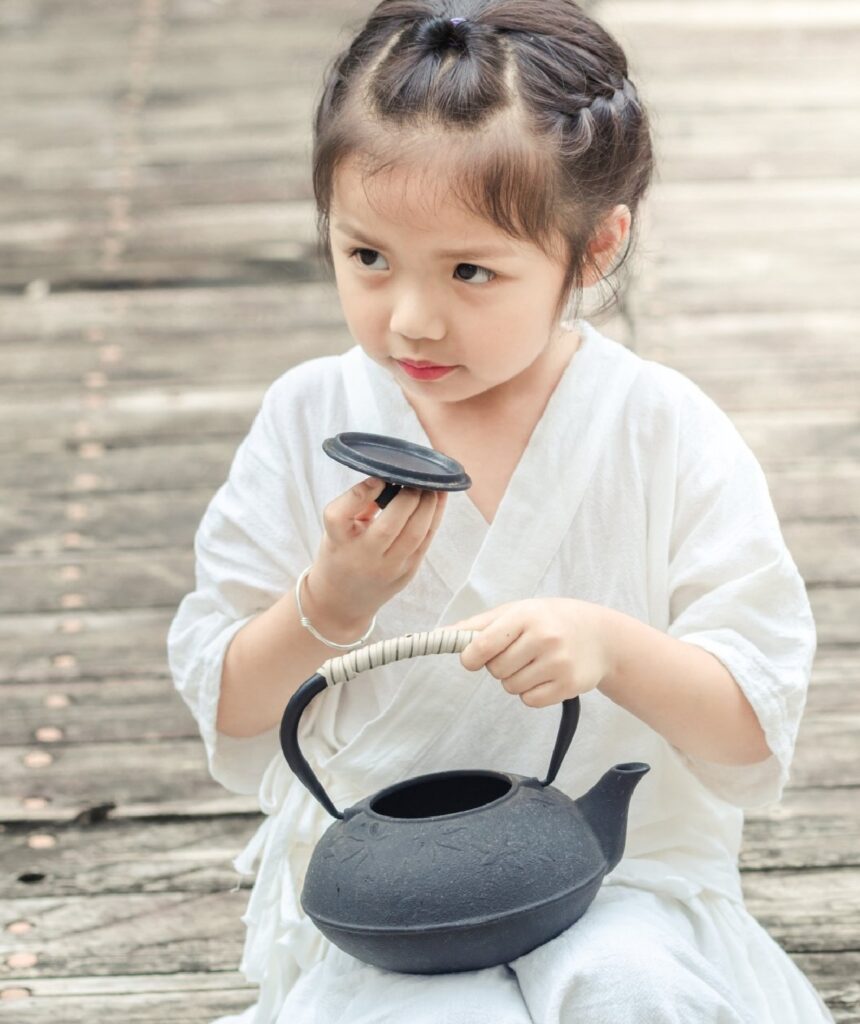
Rituals create predictability. They help children feel connected, emotionally safe, and rooted in something steady. Even small repeated moments — bedtime stories, Sunday pancakes, evening walks, lighting a candle at dinner — can become anchors in a child’s memory and nervous system.
The Importance of Rituals
One unexpected place mom of two Anne Michelsen learned this lesson was through the Japanese Tea Ceremony.
“Nine-year-old Yuu looks like a little butterfly in her bright yellow flowered kimono. Her face is solemn, but her eyes dance as she follows her mother into the tea dojo, or practice room for the Japanese Tea Ceremony. Together, they approached the tokonoma — a built-in niche at one end of the tea room — where the tea sensei had placed a beautiful scroll and arrangement of flowers. Kneeling on the woven tatami mats, they bowed and took a few moments to quietly observe the space before joining the others.”
“My daughter, Aster, is one of two young teens in the class,” Michelsen explains. “We decided to participate as a family in support of her deep interest. The rest of the class consists of university students, professors and staff, and community members.”
At first, I found many aspects of the tea ceremony surprisingly rigid. As a busy parent, it felt almost absurd to spend precious time learning the exact proper way to pick up a tea scoop. But over time, I began to understand that the ceremony was more about mindfulness than tea.
The practice created an oasis of calm in the middle of otherwise busy days. It slowed everyone down enough to notice beauty, relationships, gratitude, and subtle moments that are often missed in modern life.
And I began to realize the value in this ritual – and indeed, the value that ritual in general imparts to us, and our children, as human beings.
Why Rituals Matter for Children
Children naturally crave structure and predictability. Rituals offer a comforting sense of familiarity and belonging, especially during stressful or uncertain times. They can offer an oasis of peace and a grounding sense of being “in the moment,” in the midst of otherwise frenetic school and work schedules.
Incorporating ritual can offer a comforting sense of familiarity, a framework around which to structure the sometimes confusing and contradictory events of our lives, and a sense of belonging to a community greater than ourselves.
At its best, ritual can become a connecting link between the physical and the spiritual. Rituals have been used for millennia as an important and effective vehicle for teaching both great spiritual truths, and the practical skills needed to live a life in harmony with others.
“The function of ritual,” as the late great mythologist Joseph Campbell pointed out, “is to give form to human life, not in the way of a mere surface arrangement, but in depth.”
Repeated family rhythms help children feel emotionally secure because they know what to expect. In many ways, rituals communicate: You are safe here. You belong here. This matters.
Research has shown that family rituals can help reduce stress and strengthen emotional resilience. They also create opportunities for connection in a culture that often pulls families in separate directions.
Unlike routines that exist purely for efficiency, rituals carry emotional meaning. They transform ordinary moments into experiences children remember.
A bedtime story becomes a signal of comfort and connection.
Friday pizza night becomes stability.
A yearly camping trip becomes part of a child’s identity.
Even simple rituals can help regulate the nervous system by creating repeated experiences of calm, predictability, and togetherness.
What Rituals Teach Children
The Tea Ceremony is a fantastic example of spiritual lessons embodied in ritual. In fact, its roots are spiritual rather than social; it was developed by 14th century Zen Buddhists in order to impart the principles of harmony, respect, purity and tranquility.
As an observer, here are just a few of the lessons I believe are embedded in the ceremony (many of which are sorely lacking in modern society):
Respect for Others
Throughout the ceremony, participants are expected to show consideration and respect for everyone present. Small gestures matter. Before eating or drinking, each guest will turn to the one below and ask pardon for going first. Respect is also shown in myriad more subtle ways throughout the ceremony, both between participants and directed towards the objects used.
A Holistic or Community Approach
To study tea is to study relationships, and the interdependence of all elements in a system. Everything is important; every gesture and minute detail carries meaning. One learns, too, to be aware of and to respond appropriately to subtle signals from the host or guests.
Appreciation for Beauty
Participants pause to notice flowers, art, seasonal details, and handcrafted objects. The ceremony creates space to observe beauty that might otherwise go unnoticed in daily life.
Focus and Self-Discipline
The practice requires patience, repetition, and attention to detail. Children learn that mastery takes time and that not everything needs to happen quickly.
Gratitude
Expressions of thanks are woven throughout the ritual, reminding participants to appreciate both the experience and one another.
Connection to Nature
Sen Rikyu, the great 16th century tea master who popularized the Tea Ceremony, brought to the practice a rustic simplicity more in harmony with nature than earlier, more ostentatious variations. He insisted that flowers, in particular, should be arranged “the way they appear in the field,” thus recognizing nature as the ultimate aesthetic ideal.
Hygeine
In addition to keeping the tea utensils, kitchen and dojo spotlessly clean, the tea ceremony itself includes ritual purification. The idea is that there is a connection between how we care for our physical surroundings, and our spiritual well-being. (It may be coincidence, but I’ve noticed my daughter’s room becoming significantly neater since beginning to study tea!)
Balance of Spiritual & Material
We are spiritual beings who live in physical bodies and sometimes there’s a tendency to focus primarily on one or the other. This can lead on the one hand to an overly materialist or carnal existence, and on the other to ungroundedness or neglect of one’s physical needs. Rituals like the Tea Ceremony help firmly ground the spirit within our physical existence for the purpose of living a balanced life – a physical life infused with the spiritual. In other words, they help teach both children and adults how to integrate spiritual values into the real, physical world.
Enhanced spirituality is not the only benefit of ritual. Research confirms that rituals have many beneficial effects on families and individuals (source). They can help reduce stress, alleviate pain and grief, and even lesson the severity of physical disease such as childhood asthma.
Family Rituals Don’t Need to Be Elaborate
Most families are not participating in ancient tea ceremonies — and they don’t need to.
Meaningful rituals can be incredibly simple. In fact, children often remember the smallest repeated moments most vividly.
You can create rituals around:
- bedtime routines like practicing a guided meditation together
- baking together
- after-school connection time
- nature walks
- family dinners
- reading aloud
- gratitude practices
- screen-free Sundays
- birthday traditions
- morning tea or hot chocolate
What matters most is not perfection or formality. It’s consistency, presence, and meaning. As mythologist Joseph Campbell once said:
“What is important in your life? … What is important, they say, is having dinner with their friends. That is a ritual.”
Creating More Calm in Family Life
Many parents today feel overwhelmed by the pace of modern life. Children often feel it too, even when they cannot articulate it.
Young children thrive on routines. Even mundane events can be made into little rituals – making the bed, snack time, the sequence of things done before bed. (You are probably already doing this with your kids.) These little rituals provide structure to their days, and help buffer them against life’s inevitable surprises.
Rituals help create pauses in the rush. They remind us to slow down long enough to notice one another.
They help children feel rooted in family culture and connected to something larger than the endless stream of activities, screens, and distractions competing for their attention.
And perhaps most importantly, they create moments that children carry with them long after childhood ends.
During a visit from a high level tea instructor from Japan, Michelsen asked him his advice on introducing children to the Tea Ceremony.
“To be able to understand, you must first experience,” he advised. “Start by exposing them to the experience. Bring them into an environment where everyone in the group is practicing. Let them observe. Let them breathe the air, and take in the total experience. They’ll get the vibration. Afterwards, talk to them about it. Ask them what they saw, what they sensed and observed.”
He added that the experience may seem strange to them at first, but that they will become more comfortable with time.
Michelsen concludes, “As for my own family, I noticed a subtle shift after we became involved in Tea Ceremony. We all seemed a little calmer and more able to move through daily life with greater ease. Enough to make me believe that when family life feels rushed, disconnected, or overstimulated, sometimes what we need most is not another productivity system or parenting strategy.”