
What Makes a Crib Mattress Non-Toxic? (VOCs & Certifications Guide)
Here you’ll find a parent’s guide to VOCs, off-gassing, SIDS concerns, and how to choose a safer sleep space for your baby. If you’re simply looking for the best product option, find our list of nontoxic crib mattresses here.
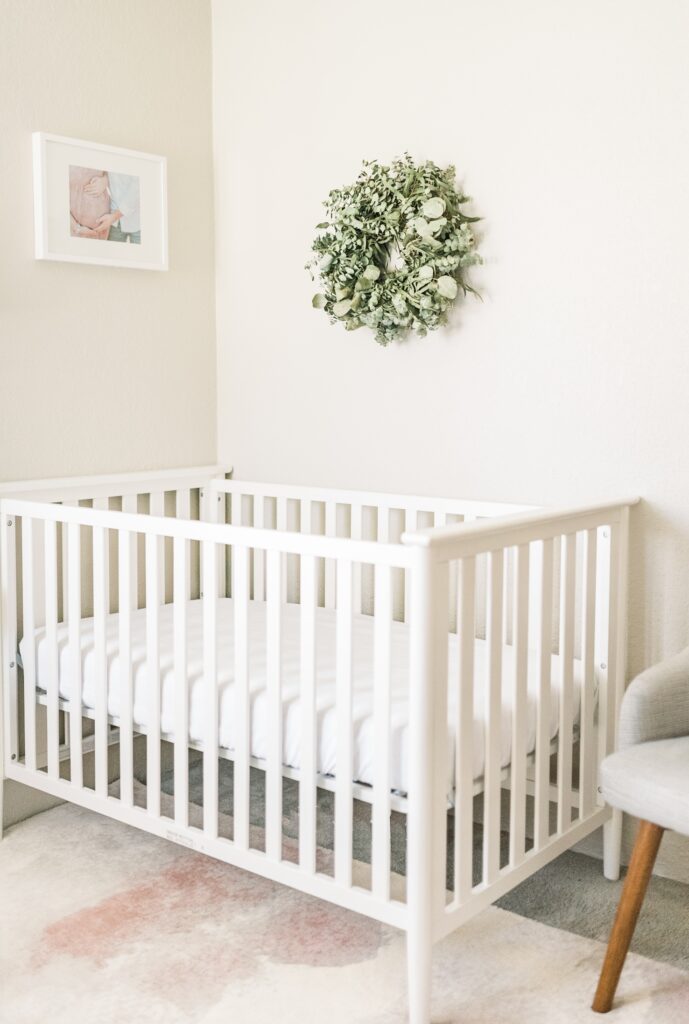
As much time as parents take designing an adorable nursery, an organic crib mattress is often an afterthought determined by cost rather than quality. That said, there is unnerving data around the effects of chemicals made in traditional baby mattress production.
Why a Safe, Nontoxic Crib Mattress Matters
“Our research shows mattresses can be a significant source of chemical contaminants in the nursery and bedroom,” says Dr. Brandon E. Boor, an assistant professor of civil engineering at Purdue (source).
Crib mattresses are generally composed of polyurethane foam, a petroleum-derived synthetic material. And they often contain adhesives and other chemical additives. The foam core is usually enveloped with a waterproof cover. These mattress components can release harmful VOCs, some of which can cause respiratory and nervous system damage (source).
Why VOC Exposure is Especially Troubling for Babies
“A baby’s exposure to chemical contaminants in their crib mattresses can be amplified since they sleep for 12 to 14 hours every day and inhale air just inches above the mattress surface, where the concentrations of the VOCs (volatile organic compounds) can be about twice as high as standing just a few feet away,” he said. “Their body heat also increases VOC emissions.”
As it stands, federal law does not require mattress companies to list the chemicals they use in their production processes.
An alarming number of toxic chemicals such as boric acid, antimony, modacrylic, formaldehyde, and polyurethane foam are used in the production of baby mattresses. Some of these chemicals are used in the construction of the mattress, glues, or as flame retardants.
When these off-gas, some of these chemicals may be linked to increases in many ailments, including allergies, eczema, organ toxicity, liver issues, and even cancer.
SIDS and Mattress Off-Gassing
When discussing baby sleep safety, SIDS (Sudden Infant Death Syndrome) and risk of suffocation is a top concern for new parents.
KidsHealth.org says SIDS is the leading cause of death for children between the age of 1 month and 1 year of age. It claims the lives of about 2,500 children each year in the United States. There is no definitive cause for this terrifyingly unpredictable condition, although there are many possible risk factors leading to SIDS.
While the correlation between SIDS and mattress off-gassing is still being investigated, there is reason to consider a connection. When the SIDS epidemic had its first major awareness campaign in 1994, a “Back to Sleep” initiative was suggested (and is still promoted) to parents and caregivers.
This is the first time that back sleeping, running a fan, and keeping baby from overheating were advised. These solutions could explain a connection to off-gassing.
These tactics would put baby’s face away from the surface of the mattress. It also circulates the chemicals up in lower concentrations and throughout the room rather than directly in baby’s direct breathing space. And baby’s sweat and body heat wouldn’t activate a higher concentration of the gasses.
5 Common Crib Materials That Off-Gas
Certain off-gassing fumes are way more harmful than others. The following are some of the worst off-gassing offenders in crib mattresses and their potential health risks to your little one. Just a reminder, by choosing an organic crib mattress like the ones listed above, you’ll avoid these chemicals.
1. Polyfluoroalkyl Substances (PFAS)
PFAS are a common chemical additive for waterproofing crib mattresses. PFAS, known as forever chemicals, are linked to a growing number of serious health concerns like kidney cancer, lowered birth weights, and immune and endocrine system disruption. The latest tests show that 99% of the population has measurable amounts of PFAS in their bloodstream. (source)
2. Vinyl/Phthalates
A vinyl crib mattress surface is a potent source of off-gassing as the phthalates (a known animal carcinogen) do not stick well to vinyl and therefore circulate in the air. Vinyl and phthalate exposure has been linked to:
- Nervous system dysregulation
- Behavioral issues
- ADHD
- Depression
- Anxiety
- Child IQ deficits
- Decrease in memory
3. Formaldehyde
When inhaled, formaldehyde can also cause irritation and damage to the nose, throat and lungs and can increase the risk of developing asthma. This toxin can also still be found in many crib mattresses as an adhesive.
4. Flame Retardant Chemicals
Fire retardants are added to baby crib mattresses with the intention of preventing or slowing the spread of fires. Although perhaps well-intentioned, these harmful substances have been linked to:
- Neurological impairments
- Immune and endocrine system disruption
- Chronic health issues
- Cancer
5. Polyurethane Foam/Memory Foam
Most mainstream foam mattresses are actually made of mostly petroleum based materials – which are highly flammable (think gasoline) and sprayed with toxic flame retardants. To reiterate why a mattress made of gasoline is bad, watch the video on flammability in this article.
What’s more, polyurethane foam is highly flammable, meaning that it requires all those toxic flame retardants we just discussed. It is also a porous material that compresses to trap heat and can make babies or toddlers feel hot and sweaty. Without proper waterproofing, this porous material can harbor mold and contribute to respiratory issues.
What to Look for in a Truly Non-Toxic Crib Mattress
- GOTS or GOLS Certification: These verify that the finished product meets stringent organic and environmental standards.
- Greenguard Gold Certification: Confirms low chemical emissions.
- No flame retardants, polyurethane foam, vinyl, or synthetic latex
- Organic materials: Cotton, wool, and food-grade polyethylene are preferred.
FAQ’s About Buying a Nontoxic Crib Mattress
Here are the questions I often hear from parents searching for a safe crib mattress.
It usually comes down to money. Unfortunately, toxic components are cheaper than high quality, organic materials. And mattress companies are not required to disclose all of the chemicals they use in their products. Sometimes they use the certifications of one of their suppliers and pretend all the components meet those same standards.
Some companies that make an eco-friendly or organic mattress will then coat it in chemical flame retardants. Don’t worry – they’re not on this list!
All mattresses sold in the United States must meet be the requirements of 16 CFR Parts 1632 and 1633, as regulated by the U.S. Consumer Product Safety Commission. (source)
Many companies soak mattresses in flame-retardant chemicals like polybrominated diphenyl ether, better known as PBDE.
These chemicals are highly toxic, and you don’t have the right to know if they’re included. These chemicals can accumulate in the body through skin and inhalation exposure and are known endocrine disruptors. Exposure can be associated with brain, hormonal, and reproductive damage.
A CDC study found that 97 percent of Americans had flame retardants in their blood, and those ages 12 to 19 had the highest levels. (source)
In addition to using certified organic components, your best organic crib mattress choice is one where the entire crib mattress is also certified organic to the Global Organic Textile Standard (GOTS). Another way to tell that it is safe and high quality is to look for the Greenguard Gold certification. Mattresses that are safe for your body are also eco-friendly.
Cotton and organic wool have been used successfully to inhibit flames and pass the government’s flammability requirements. Silica is another mostly natural, non-toxic fire blocker.
And yes, these have been found to work as well or better than their toxic counterparts. Studies have shown that the use of flame retardants in upholstery foam meeting certain standards doesn’t actually increase fire safety. (source)
Here at Green Child, we’ve covered the harmful effects of radiation since 2012.
In 2010, a guest blogger posted on the Scientific American website, and started a frenzy about the dangers of electromagnetic force (EMF) radiation and innerspring mattresses. The researchers did not actually say that innersprings act as antennas and amplified radio waves, or that innersprings increase the likelihood of cancer.
When the claim that metal coils could possibly attract or magnify EMFs came about, I set an alert to follow the studies.
Test have been taken immediately above an innerspring mattress and then repeated in the exact location of the room, but with the mattress removed. In all cases, the EMF field did not change. They could find no discernible difference between what’s immediately surrounding an innerspring bed versus further away. (source)
When I reached out to My Green Mattress about the potential issue, they told me, “Our independent testing shows no change or amplification in EMF readings when tested directly above the mattress compared to the same location with the mattress removed. Our testing includes all mattress models in multiple home settings.”
If you’re still concerned, consider buying any of the Lullaby Earth mattresses which have a WaveSupport core instead of innerspring coils. Naturepedic’s lightweight options do not contain coils. Or go with an organic latex based mattress like the Obasan crib mattress above.
Based on my research and personal experience, no.
Childhood cancers are on the rise. Our little ones are bombarded with so many chemicals, it would be nearly impossible to link an illness or condition to one thing. But when they spend half of their time touching and breathing a mattress, that becomes a huge source of exposure.
Add one of these nontoxic crib mattresses to your baby registry. Encourage a few family members or friends to go in together on it. Or if you’re paying for all of your own baby gear, prioritize the mattress over a stroller, where much of the use happens in open air.
As mentioned above with soy-based foam, it can be a sign of shady practices. A manufacturer can replace a small percentage of the polyurethane foam with plant-based ingredients and call it eco-friendly.
Keep in mind that while eco-friendly is usually good for the planet, it’s not automatically good for human health. Some playground surfaces are made from recycled tires. It’s green to reuse those tires, but you don’t really want your child laying their head down to take a nap on it.
Even bamboo may contain chemical solvents that result in a cellulose fiber similar to the synthetic fabric, rayon.
If you plan on co-sleeping, be sure to follow safe co-sleeping guidelines and make sure your bed is safe from harmful off-gassing chemicals. For big kid and adult size beds, we recommend the high-quality, nontoxic mattresses from Naturepedic, Obasan, and Lullaby Earth.
Use code GREENCHILD15 to get 15% off the purchase of Naturepedic top-rated, Greenguard gold certified organic mattresses and accessories.
Or use the same code GREENCHILD15 to get 15% off at Lullaby Earth.
When you choose one of these non-toxic crib mattresses, you won’t have to worry about chemicals might wafting around your baby’s sleeping space… because there simply won’t be any.
See our top recommendations for the Best Organic & Non-Toxic Crib Mattresses for 2026 — personally tested by the Green Child team.