
Kids’ Dolphin Breath Meditation
The Dolphin Breath is a playful breathing exercise that teaches children to slow down, take deep breaths, and reconnect with their inner sense of calm. In this guided meditation, your child imagines surfacing for fresh air and practicing a simple breathing technique they can use anytime they feel overwhelmed or need a quiet moment.
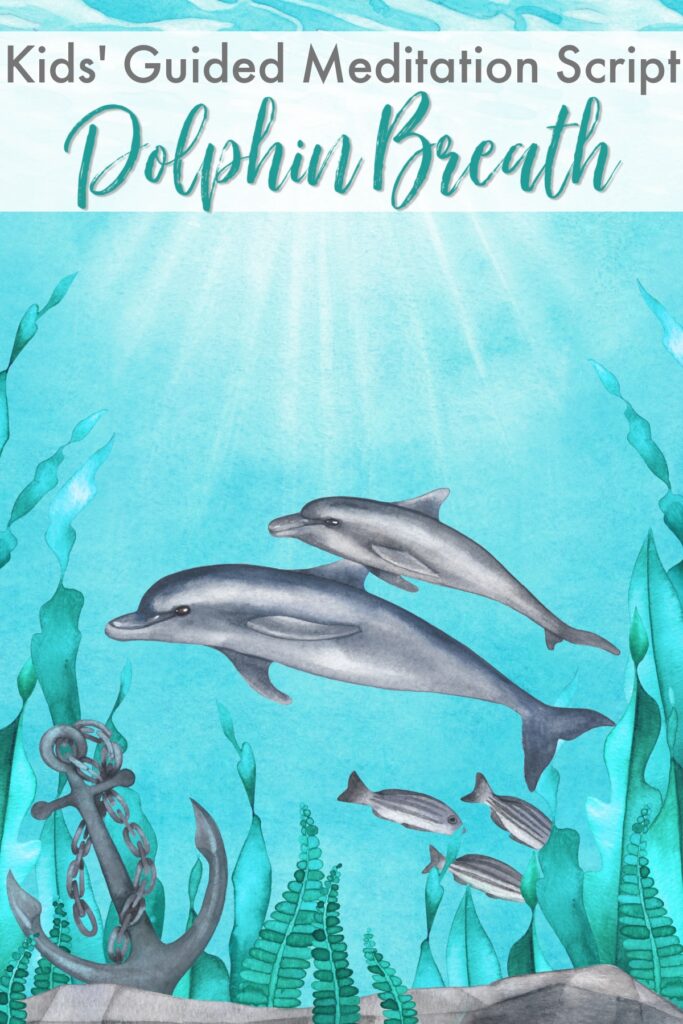
Get ready to dive into calm.
Dolphins are curious, caring animals who know how to ride the waves and support one another. When one dolphin is injured, others circle around to help it rise to the surface for air. That same spirit of support and kindness is something we can carry with us, too.
Before beginning, read the script to yourself to get comfortable with the flow. Invite your child to settle into a cozy, quiet spot. If they need help grounding, try starting with a few simple somatic movements or longer relaxation time to help their body feel safe and still.
What is Dolphin Breathing?
Dolphin breathing is a simple visualization-based breathing exercise. Children imagine they are dolphins swimming beneath the ocean before gently surfacing to exhale and take one slow, deep breath. The movement encourages longer exhalations, mindful breathing, and body awareness.
This script is copyrighted by ShambalaKids and may only be used for in-person or live virtual reading. It may not be recorded for audio /video.
Dolphin Breathing Meditation for Kids
Settle in and get comfy. We’re going to learn a new breathing technique to help us cultivate stillness within.
Close your eyes and take in a deep breath. Then let it out and feel your body relax.
With each breath, feel your chest and belly expand. Then let it all go as you exhale as you get more calm and still.
Now imagine before you the vast, deep ocean. The water is vibrant turquoise, and the waves are gently lapping at the sand as you dig in and scrunch your toes.
The sand feels nice on your bare feet. You walk slowly toward the ocean and… knowing it’s perfectly safe, you decide to dive in.
Something magical happens as the warm water safely and gently surrounds you. Your body turns into a beautiful, sleek dolphin. Somehow you aren’t even surprised at this. Your skin is smooth. Your body is muscular and strong.
As you glide through the clear blue water, tiny streams of sunlight dance around you. They reach through the surface like golden ribbons, warming the water all around you.
Small silver fish swim beside you for a moment before darting away together. A sea turtle drifts peacefully past, moving so slowly that it reminds you there is no need to hurry.
You find it amazingly easy to swim anywhere fast or slow. This water is home. You playfully jump out of the water into the air and then happily dive back in. There are other friendly dolphins around you, and they love to swim and jump alongside you.
Just like a dolphin, you breathe air through the blowhole on top of your head. Every time you rise to the surface, you gently breathe out before taking one long, fresh breath in just like this:
Rise to the surface…
Breathe all the air out with one strong, steady whoosh…
Now take one slow, deep breath in…
And gently dive beneath the waves again.
Feel the air flow deep into your lungs and belly. Let’s stay near the surface a bit and do more dolphin breathing to get the hang of it.
Let all of your air flow out in one smooth, steady breath… whoosh… Then fill your lungs with one long, fresh breath in before diving beneath the water once more.
Continue breathing in this way, imagining the air traveling deep down into your body and circulating everywhere. Then visualize the air moving back up and out through your blowhole. Just concentrate now on breathing these dolphin breaths for five more breaths.
(Pause reading and go through the five breaths along with your child.)
You’re doing a great job. Deep, deep breath in, and fully exhaling out all of the air.
Now simply float and rest, breathing normally. Feel how wonderful it feels to float here in the warm, relaxing water and experience the stillness all around you. The ocean is very gentle. It cradles you and rocks you gently in its arms.
The ocean is always moving. The waves rise and fall. You don’t have to stop the waves to feel peaceful. You simply learn to move with them, one gentle breath at a time.
Whenever life feels noisy or your thoughts start racing, you can remember your dolphin breath. One slow breath at a time can help you feel a little steadier, a little safer, and a little more connected to the calm that’s always inside you.
The more we practice tapping into the stillness, the easier it is to experience it anytime we need to calm ourselves and feel connected to the peace within.
You’ve done a wonderful job learning the dolphin breath for stillness today. When you’re ready, you can open your eyes and give your human body a nice, big stretch.
After the Meditation
After a deep breathing practice, your child will probably feel very relaxed. If they fell asleep, great! If not, you can discuss how they felt in their imaginary dolphin body and ask if they would like to share anything about the experience. Keep your voice low to maintain the sense of calm.
Here are some questions we’ve gotten about the dolphin breath technique for kids:
When should my child practice Dolphin Breathing?
Dolphin Breathing can be used anytime your child needs a moment to slow down and reset. It works well before bedtime, after a busy day, before a test or performance, during moments of frustration, or anytime big emotions begin to build. Like any mindfulness practice, it becomes more familiar and effective with regular use.
What are the benefits of Dolphin Breathing?
Practicing Dolphin Breathing encourages slow, deep breaths that can help children relax their bodies and become more aware of how they’re feeling. The playful ocean visualization also supports imagination, emotional awareness, and mindfulness. Over time, children may begin to recognize that taking a few intentional breaths is one tool they can use when they need to pause, refocus, or feel more grounded.
Is Dolphin Breathing the same as deep belly breathing?
Dolphin Breathing is a type of deep breathing exercise, but it adds a guided visualization that makes the practice especially engaging for children. Instead of simply taking slow breaths, children imagine themselves as dolphins rising to the surface for fresh air. This combination of imagination and mindful breathing can make it easier for young children to stay focused and enjoy the practice.
Can Dolphin Breathing help children with anxiety or big emotions?
Dolphin Breathing isn’t a treatment for anxiety, but it can be a helpful mindfulness tool when children feel worried, overwhelmed, or emotionally activated. By slowing their breathing and focusing on a peaceful ocean scene, children practice noticing their feelings without becoming overwhelmed by them. Many families find it especially helpful before bedtime, during transitions, or after stressful moments as part of a regular calming routine.
More Deep Breathing Meditations
Thousands of parents, teachers, and counselors use these meditations with their children and students. Here are a few others your child might enjoy:
Figure 8 Breathing Meditation for Kids
Deep Breathing Exercise
Body Scan for Kids
The Peaceful Butterfly
The Mindfulness Cabin (includes an adorable free printable)
You can access the PDF of this dolphin breath guided meditation and our ongoing library of 70+ guided meditation scripts downloadable PDFs when you subscribe below.