
Non Toxic Spring Cleaning Checklist
With our non toxic cleaning checklist, you’ll be ready to tackle the dirt, dust, and clutter without exposing your family to unnecessary chemicals.
Why a Non Toxic Spring Cleaning Checklist Matters
Every day, many of us spray, wipe, and scrub with products that contain impossible-to-pronounce ingredients and impossible-to-identify chemicals. These products may do the job they were designed for, but what about the long-term health and environmental impact?
Is a smudge-free window worth a wheezing toddler?
Cleaning with bleach and harsh chemicals affects your indoor air quality. And when you actually read the warning labels on many conventional cleaners, it’s hard to ignore the risks — especially in homes with children and pets.
Our non toxic spring cleaning checklist helps you refresh your home without increasing your family’s chemical burden.
The other benefit of using a checklist is that it’s hard to remember ALL THE THINGS that need to be cleaned or serviced.
One example is our dryer vent, which goes out through the roof. While we’ve cleaned at the wall and back of the dryer, we hadn’t cleaned out the vertical vent in a few years. We borrowed a dryer vent cleaning tool that attaches to a drill, and an alarming amount of dryer lint came out. The good news is – our drying time is almost cut in half now. But it’s scary to think we were wasting energy and increasing fire risk by not doing it sooner.
Indoor Air Quality Depends Makes an Impact on Health
Because modern homes are well-insulated and energy efficient, indoor air can be more polluted than outdoor air. And this is especially true if you use conventional cleaning sprays, disinfectants, and fragranced products.
Many mainstream cleaners contain:
- Volatile Organic Compounds (VOCs) that linger in the air
- Synthetic fragrance blends that may include phthalates
- Chlorine bleach and ammonia
- Quaternary ammonium compounds (often called “quats”)
- PFAS and other persistent chemicals
These ingredients can contribute to respiratory irritation, hormone disruption, and skin sensitivities especially in children, whose small bodies are still developing. Children breathe more air per pound of body weight than adults, making indoor air quality especially important
Spring cleaning is the perfect opportunity to refresh your space in a way that supports your family’s health instead of compromising it.
Essential Non Toxic Cleaning Supplies
Before you begin, gather a few simple, effective ingredients. Most natural cleaning routines rely on these staples:
- Baking soda
- Distilled white vinegar
- Hydrogen peroxide
- Castile soap
- Microfiber cloths
- A vacuum with a HEPA filter
These basics can handle most household cleaning tasks without synthetic fragrances or harsh chemical residues. (You can explore our full guide to the best homemade cleaners here.)
Printable Green Cleaning Checklist
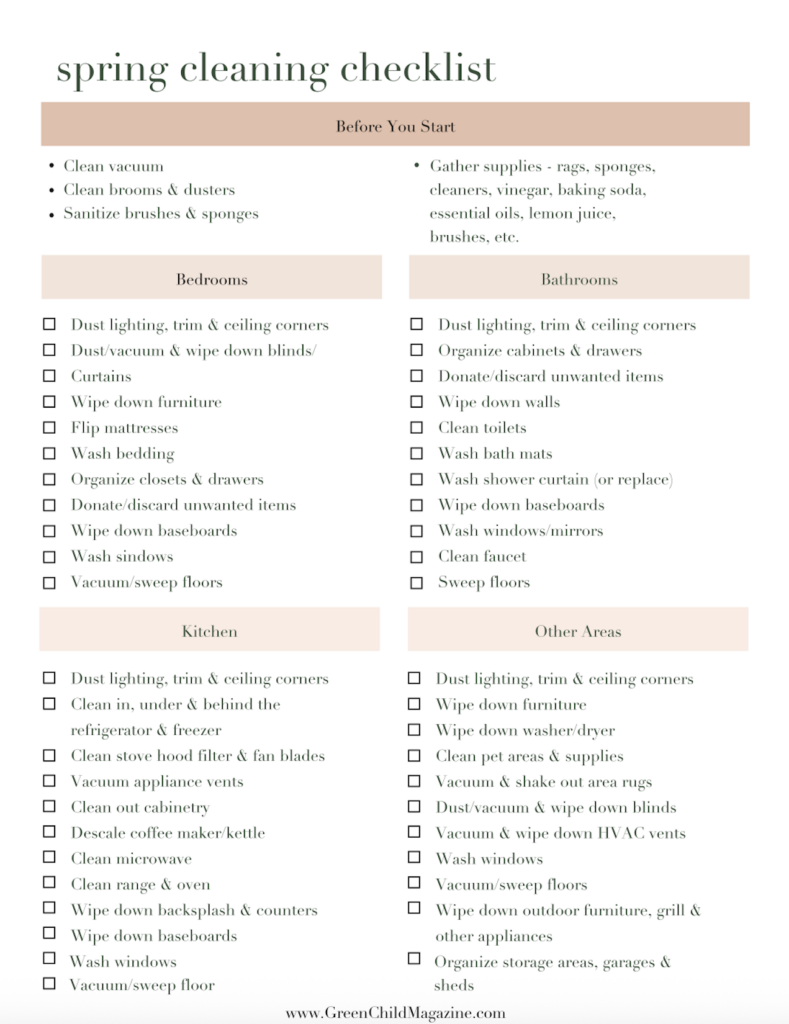
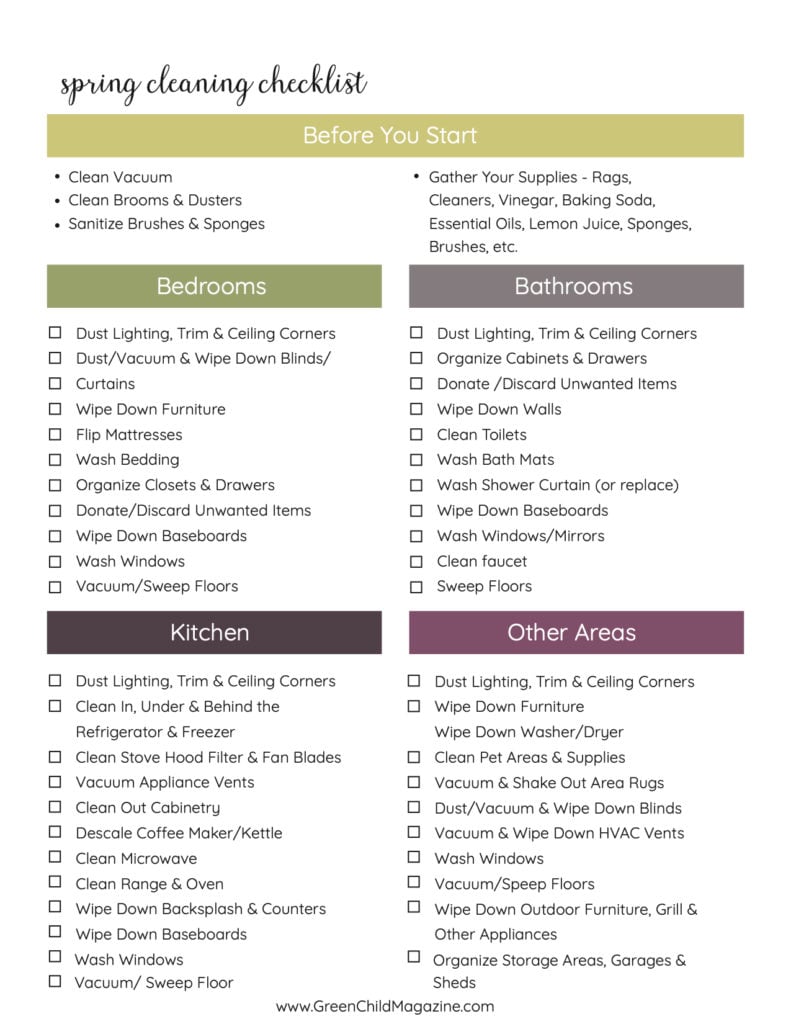
Here’s a printable spring cleaning checklist you can follow. (Click on either image for a PDF you can download and print.)
Start With Clean Cleaning Tools
Start with clean tools so you’re not spreading old dirt, allergens, or bacteria around your home.
- Take your vacuum cleaner apart. Most bagless vacuums come apart easily and can be washed in the sink or tub. Clean or replace filters as needed.
- Sanitize reusable sponges and brushes by soaking them in boiling water with baking soda or vinegar.
- Use old toothbrushes for grout lines, window sills, and other tight spaces. If any tool has contacted mold, discard it. Being super sustainable is not worth potentially spreading mold to other areas of your home.
Kitchen
- Dust lighting, trim, and ceiling corners
- Clean inside, under, and behind refrigerator and freezer (get dust and lint out of air circulation areas)
- Wipe inside refrigerator drawers and door seals
- Clean stove hood filter (remove and soak in vinegar & water mixture) & fan blades
- Clean range and oven
- Vacuum appliance vents
- Wipe cabinet fronts (especially near handles)
- Clean out cabinets and donate unused items
- Descale coffee maker or kettle
- Clean microwave
- Clear and disinfect drains using baking soda and vinegar
- Clean garbage disposal splash guard
- Clean under sink (check for leaks, wipe pipes)
- Wipe backsplash and counters
- Wipe down baseboards
- Wash windows
- Sweep and mop floors
- Wash or clean out reusable grocery bags
- Check or replace water filters (fridge, standalone, or pitcher)
Bathrooms
- Dust lighting, trim, and ceiling corners
- Organize cabinets and linen closet, discard expired products
- Wash windows and mirrors
- Clean sinks and faucets
- Refill hand soap containers (try our DIY foaming hand soap to reduce plastic waste)
- Wipe down walls
- Clean toilets
- Wash bath mats
- Wash toothbrush holders (we run them through the dishwasher once a month)
- Wipe light switches and door handles
- Clean exhaust fan cover
- Check and wash bath toys (if applicable)
- Clean grout
- Wash or replace shower curtain
- Wipe down baseboards
- Sweep and mop floors
Bedrooms
- Dust lighting, trim, and ceiling corners
- Clean blinds or curtains
- Dust furniture
- Flip and refresh mattresses (sprinkle baking soda, let sit, then vacuum)
- Wash bedding
- Shake pillows outside
- Wipe down headboard
- Clean closet floors
- Dust lampshades
- Organize closets and drawers, donate unused items
- Wipe down baseboards
- Wash windows
- Vacuum or sweep floors
Throughout the House
- Dust lighting, trim, and ceiling corners
- Dust furniture
- Clean remote controls
- Wipe light switches
- Clean behind TV and electronics
- Vacuum and rotate couch cushions
- Wipe down washer and dryer
- Clean pet areas and launder beds (here’s a guide to reducing allergens in the home with pets)
- Shake out and vacuum rugs
- Clean blinds or curtains
- Wipe HVAC vents and change filters
- Wash windows
- Vacuum or sweep floors
- Check smoke and carbon monoxide detector batteries
- Rotate and test emergency supplies
Laundry Area
- Clean washer gasket (here’s how to clean mold from a washing machine)
- Wipe detergent dispensers
- Clean dryer vent hose (important for fire safety)
- Dust tops of washer, dryer, and any shelves
- Deep clean laundry sink if applicable
Outdoors
- Clean porch, deck, lanai
- Wipe down outdoor furniture
- Clean grill or any outdoor cooking devices
- Clean (hire someone to clean) gutters
- Clean outdoor play equipment and toys
- Check irrigation system
- Organize garage or garden shed and donate unused items
- Service garden tools: sharpen lawn mower blades and clippers, check hoses for leaks
How to Prepare for a Non Toxic Spring Cleaning Day
Before you begin your non toxic spring cleaning checklist, a little preparation makes the process smoother.
- Open windows and doors if the weather allows. Fresh air helps clear out dust and lingering indoor pollutants. (Try to time your spring cleaning before or after peak pollen season.)
- Gather your simple supplies in one place so you’re not constantly switching products or running from room to room. A basket with baking soda, vinegar, Castile soap, microfiber cloths, and a scrub brush is often all you need.
- Declutter before you deep clean. It’s much easier to wipe surfaces, vacuum floors, and organize cabinets when unnecessary items have already been removed. Set aside a donation box and keep it nearby as you work.
- Clean from top to bottom. Start with ceiling corners, light fixtures, and vents before moving to counters and floors. This prevents you from re-cleaning surfaces after dust settles.
- Pace yourself. Work room by room over a week or two if needed. A healthier home is built through steady, intentional habits not a marathon cleaning session.
Frequently Asked Questions About Non Toxic Spring Cleaning
Are natural cleaners actually effective?
Yes. Baking soda, vinegar, hydrogen peroxide, and castile soap can handle most everyday cleaning tasks when used properly. For heavy disinfection needs, proper technique matters more than harsh chemicals.
Is vinegar enough to disinfect?
Vinegar is effective for breaking down grime and mineral buildup but is not a registered disinfectant. For higher-risk areas, hydrogen peroxide can be a safer alternative.
Can I mix baking soda and vinegar?
They create a fizzy reaction that helps loosen debris in drains, but once the reaction finishes, the cleaning power is neutralized. They’re best used sequentially for specific tasks.
How often should I spring clean?
A deep clean twice per year is typical, with smaller seasonal resets in between.
What if I have pets?
Choose fragrance-free products and avoid essential oils that may be unsafe for animals. Launder pet bedding regularly and use a HEPA vacuum to reduce allergens.
A Healthier Home, One Room at a Time
A non toxic spring cleaning checklist isn’t about perfection. It’s about creating a home that feels lighter, cleaner, and safer without exposing your family to unnecessary chemicals in the process.
Be sure to download the printable checklist so you can work through it at your own pace.