
90s Kid Summer: More Freedom and Less Screen Time
Parents across social media are talking about a 90s Kid Summer. The trend is filled with nostalgia about riding bikes until the streetlights come on, sprinklers in the backyard, chapter books stacked beside the bed, friendship bracelets, lemonade stands, and long afternoons spent outdoors.

At first glance, it might seem like a throwback trend. But the popularity of the 90s Kid Summer reveals something deeper.
Many parents are tired. Tired of overscheduled calendars and competing with screens, activities, enrichment programs, and the constant pressure to make childhood extraordinary.
The appeal of a 90s Kid Summer isn’t really about recreating a specific decade. It’s about how simplifying your child’s world can benefit the whole family.
Why the 90s Kid Summer Is Resonating
For most younger Gen X and millennials, summer break was wonderfully ordinary.
There were impromptu neighborhood gatherings. Trips to the library. Swimming lessons and summer camp. Board games, coloring books, backyard adventures, and afternoons spent figuring out what to do next.
Of course, we watched television.
Most of us probably watched more than our fair share during summer break. The difference was that the TV usually lived in one room of the house. Everyone had to agree on what to watch (or take turns choosing which VCR tape to pop in). When the show ended, there was often nothing left to do but head outside, pick up a book, or find a friend.
Childhood wasn’t perfect in the 1990s. But many parents are recognizing something valuable in a childhood that left room for imagination, independence, and unstructured time.
The Pressure to Create the Perfect Summer
Today, it’s easy to feel like summer should be packed with activities.
Social media fills our feeds with bucket lists, elaborate vacations, educational experiences, themed crafts, and endless ideas for making every day memorable. While these activities can be wonderful, they can also create an unspoken pressure that summer needs to be productive, enriching, and exciting at all times.
But kids don’t need a major vacation, a packed calendar, or a new activity every day.
Some of their favorite memories may come from the simplest moments: eating popsicles on the porch, reading under a blanket fort, helping make dinner, riding bikes with friends, or catching lightning bugs as the sun goes down.
And let’s be honest – today’s kids need to experience boredom.
It might be uncomfortable, but boredom is frequently the starting point for creativity. Without constant entertainment, previous generations of children invented games, played in a creek, made up stories, and learned how to fill their own time.
What a 90s Kid Summer Doesn’t Mean
Our parents certainly didn’t have a carefully curated list to follow. And as you’ll see from some of the quotes further down, just the act of planning a summer schedule for kids negates the vibe.
When you were a kid, you were probably just home for the summer (or went to day camps or a babysitter) while your parents worked. So don’t put pressure on yourself to optimize summer break for a trend – no matter how appealing it might be.
- It doesn’t mean banning screens completely.
- It doesn’t mean children should spend their days unsupervised.
- It doesn’t mean every child thrives with endless unstructured time.
- And it certainly doesn’t mean parents should feel guilty if their children attend camp, childcare, or structured activities.
About Summer Parenting Guilt
Don’t let this be yet another reason to stress out. We’re letting go of mom guilt, remember?
One mom wisely said:
I interpret the 90s trend as just doing things that have kind of gone away because of technology interference or “doing less” (which has made me feel better for not having big plans for their summer) Highlighting things like boredom, old movies, reading chapter books at bedtime, camps, bike rides, coloring, cooking together. I felt like it was meant to be more of a dig at tech and the hustle culture than anything else.
And when discussing the very valid topic of whether unstructured days are ideal for neurodivergent kids who tend to respond better to a routine, another parent shared:
I was neurodivergent before it was a buzz word and I grew up in the 80’s. EVERY summer was at least 75% unscripted and I THRIVED!
The goal isn’t to recreate someone else’s childhood. It’s to create enough space for your children to play, imagine, explore, connect with others, and experience the gift of boredom.
How to Create a 90s Kid Summer
If the idea appeals to you, start small.
Leave a few days on the calendar completely open. Visit the library and let your children choose books that spark their curiosity. Keep simple supplies available such as sidewalk chalk, art materials, balls, jump ropes, card games, and opportunities to play outside. Read chapter books together at bedtime. Have family movie nights. Let children help cook dinner, build forts, create their own games, or come up with summer projects.
Most importantly, try not to rush in and solve boredom immediately. Sometimes boredom is simply the space where imagination begins.
If the idea of an entirely unplanned summer feels overwhelming, consider choosing a general theme for the week rather than scheduling every day.
- Nature Week might include day hikes, evening walks, birdwatching, stargazing, or backyard picnics.
- Library Week could focus on reading, storytelling, or creating a little free library.
- Water Week might include sprinklers, super soaker or water balloon fights, swimming, creek exploration, or water safety skills.
- Maker Week could involve art projects, sewing, building, gardening, or learning a new hands-on skill.
The goal isn’t to create a miniature summer camp at home. It’s simply to give summer a gentle rhythm while still leaving plenty of room for spontaneity.
And Always Keep a Sense of Humor
As the school year ends, our team has been enjoying the conversations on social about how to have a proper 90s Kid Summer. Especially the funny ones because they keep us humble when we romanticize our childhoods.
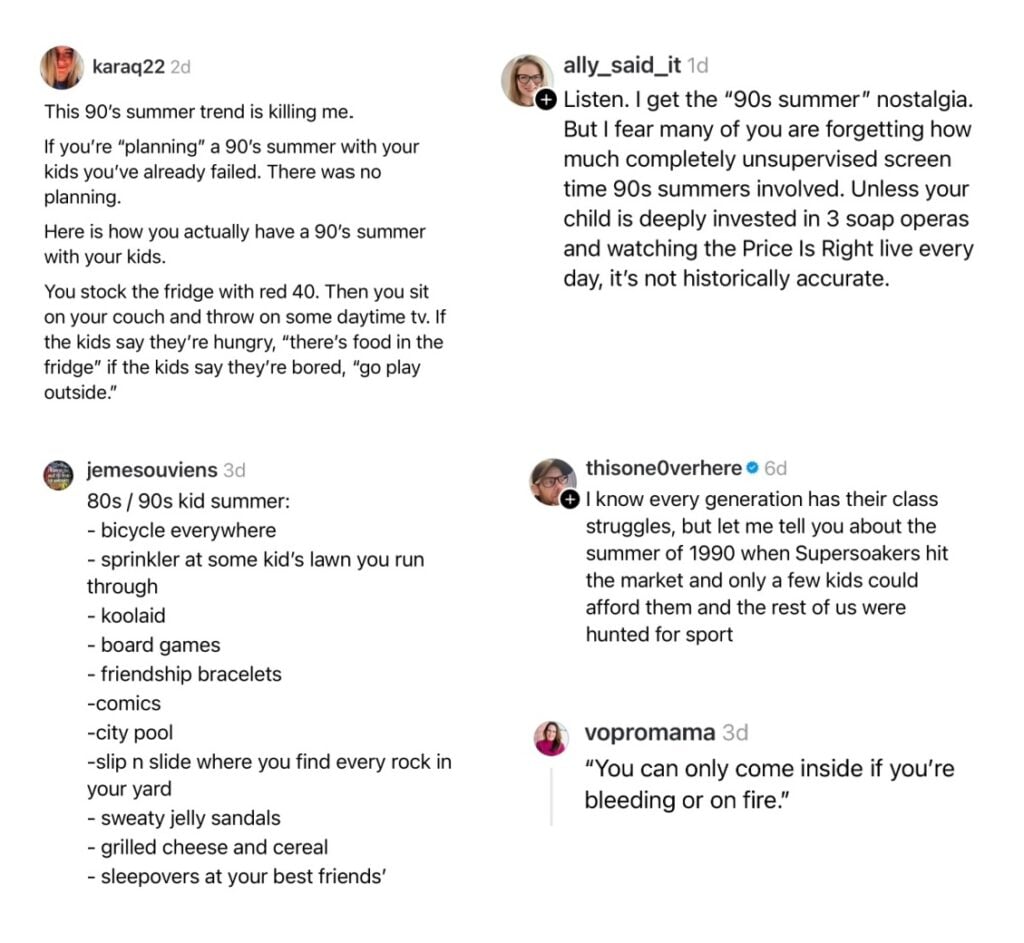
Perhaps the appeal of the 90s Kid Summer isn’t nostalgia at all. Because years from now, your children probably won’t remember every activity you planned. But they may remember bike rides, bedtime stories, popsicles on hot afternoons, family movie nights, neighborhood adventures, and long summer days that seemed to stretch forever.