
Where Wonder Takes Wing: Inquiry-Based Learning Through Bird Watching
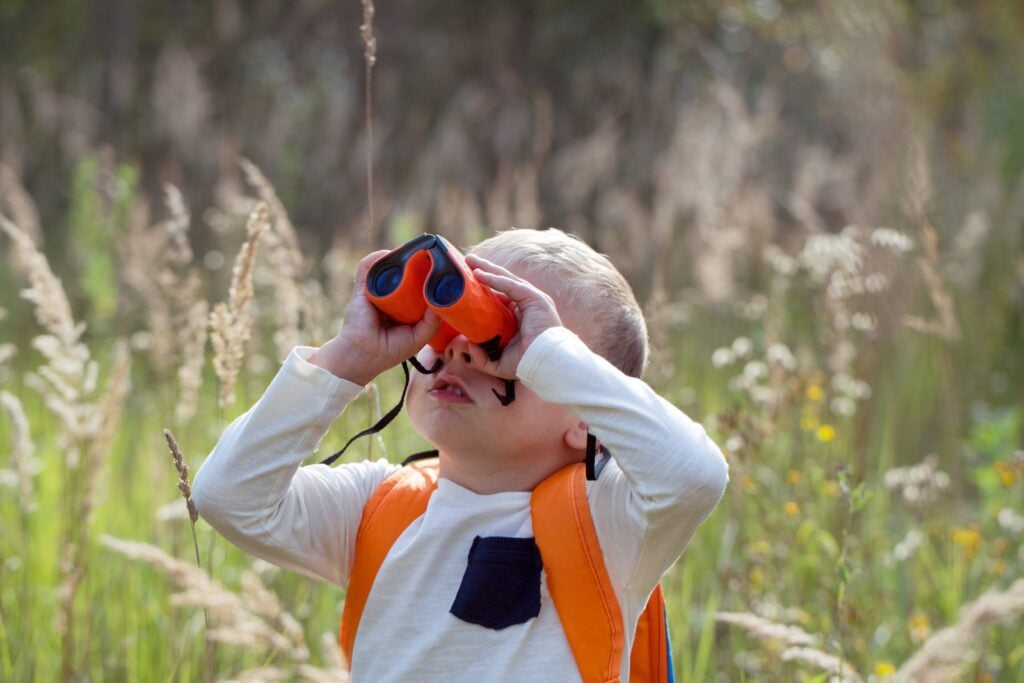
Bird watching with your kids is a great way to spend quality time together outdoors, build a greater connection to nature, and develop important observational skills. With more than 11,000 known species of birds in the world, there’s always something new to see and learn!
Considering their huge presence and species diversity, birds provide a great opportunity to engage in inquiry-based learning with your child.
What is Inquiry-Based Learning?
If you’ve had a toddler, you’ve heard the many echoes of “why,” “how,” and “what” as they learn and grow curious about the world around them. As children, we are born with inquisitive minds that yearn for knowledge and understanding.
Inquiry-based education focuses on student-centered learning where students take the lead on exploring the topic and following their natural sense of curiosity. A learning environment that encourages exploration, questioning, and real-life participatory learning can help improve learning outcomes and encourage critical thinking skills.
Think of the classic owl pellet-dissection project. In a traditional setting, a teacher may give a lecture to students about what exactly they can find in the owl pellets, what owls eat, and then identify the bones found for them with a simple identification sheet.
To do the same project in an inquiry-based way, you can start with a question that sparks a sense of curiosity and exploration with your child. Perhaps it would be talking about an owl’s beak shape or talons and asking your child what they think an owl would use those for. Let your child ask questions, and continue to guide them by asking what they think owls would eat. Then, work with your child/children to dissect the owl pellet and let them take the lead in looking at an identification guide to see what the owl might have eaten.
Using inquiry-based learning can not only improve learning outcomes, help children make real-world connections, and provide active-learning opportunities. In addition, it can help children develop their own unique learning strategies that will lead to strong, independent thinkers.
Why Bird Watching is Engaging for Kids
Not only are birds abundant in most countries around the world, but the types of birds in your neighborhood also change throughout the year as migration occurs. This provides ever-changing experiences to discover new things!
Bird watching is also allows kids to develop observational skills by looking for birds, listening for birds, and searching for clues that birds were there… like holes made by woodpeckers, bird droppings, or feathers.
Birds are also important to study because they can help us understand the overall health of the ecosystem. Several bird species are what we call “indicator species,” meaning that scientists track their populations in order to look at habitat change, the environment, and levels of biodiversity. Birds also offer several essential ecosystem services like pollination, pest control, and seed dispersal.
Here are some fun and educational inquiry-based activities to do while exploring the world of birds!
1. An Introduction to Observation
Let’s start with a simple activity that will spark curiosity and deepen observational skills. Find a place in a park or in your backyard where you can sit uninterrupted. For 3-10 minutes, depending on the age of the children, challenge them to quietly observe what they see and write it down or draw pictures.
Do any questions come up for them about what the birds are doing, why birds act the way they act, why a bird looks a certain way? Encourage them to think about everything they see – colors, scents, sounds, movement.
After the time is up, talk with each other about what you noticed. What questions came up? What do you want to explore more? How can you facilitate a project or exploration to dive deeper into something they observed or had questions about?
2. Create Your Own Bird Species
Go on a bird walk and notice the differences in the birds you see. Look at beak size and shape, how fast or slow the bird flies, where they choose to sit, how they move. You can also look through a bird field guide with your child and explore the various shapes and looks of different kinds of birds.
Encourage your child to wonder and question why birds look the way that they do. Then, grab coloring utensils and paper and create your own bird species!
What color of bird would you be?
Would your beak be short and curved like a parrot for cracking open and eating seeds or sharp like an eagle or a hawk for catching prey?
What kind of habitat would your bird live in?
For older students, this could be a great way to explore bird adaptations and traits.
3. Bird Call Music Composition
This activity is a great way to combine music and science. Songbirds can sing up to 2,500 times a day! The calls and songs that birds sing have many different meanings, like guarding territory, attracting mates, or warning of danger. Go on a bird walk and listen to the different noises you hear from the birds.
What do you think these sounds mean?
How many different calls or songs can you hear?
After observing, come up with your own fun bird song. For children who are interested in music or take music lessons, ask them to think about rhythm and pitch.
Is the bird song you created slow or fast?
Do you think it means something different if birds are chirping quickly versus when they are chirping slowly?
If you and your child want to listen to more bird calls to create your own song, check out this library of bird sounds.
4. Bird Dance-Off
This activity requires watching videos online (unless you happen to live near one of the several species of birds that “dance”) and is great to do on a rainy day when you can’t go outside.
Several types of birds participate in a “dance” to attract other birds and show off their feathers, including the Costa’s Hummingbird, Sandhill Cranes, and Magnificent Riflebirds. Watch some videos of dancing birds with your child, and ask them what they notice.
What kind of movements do they do?
Can you make up a dance routine inspired by the birds?
As a bonus, this can be used with the music composition activity above for your child to create their own musical showcase!
5. Nest Building
Birds make nests by burrowing in the ground, putting together material in trees or on buildings, or using a hole in a tree. On a bird walk, see if you and your child can spot any bird nests.
What do you notice about them?
What materials do you think they used to build their nests?
After observing and asking questions, encourage your child to think about how they would build a nest if they were a bird. Then, have them look around the area for materials to build a nest of their own in the park or your backyard. Think about what materials you use that a bird would use, as well.
What kind of features your nest would need to have? Encourage your child to think about ways to keep out predators and if materials need to survive weather conditions like rain or snow. Have them test out their materials to see if they’d be able to survive in the wild. This can be a fun way to encourage outdoor play by having your child build their own nest!
Note: while it’s exciting to see nests in the wild, please be sure to not touch or disturb any nests you may find!
6. Egg Coloring Project
Many creatures lay eggs, like some fish species, frogs and other amphibians, and snakes, but bird eggs come in all different shapes, sizes, and colors! While it can be difficult to find bird eggs out in the wild, you can explore the wide variety of egg colors and patterns that birds have online.
Some birds have pretty blue eggs, like the Robin, while some birds have eggs that are camouflaged to protect them from predators, like the Golden Plover. Explore the different types of bird eggs with your child and encourage them to ask questions and make observations.
Hard boil some eggs and prepare natural egg dyes or have markers or paint on hand. Encourage your child to create their own types of bird eggs. Let them lead the activity and choose colors and patterns for their eggs based off of their observations and questions while looking at bird eggs. For a simpler, vegan alternative, they can draw eggs or use wooden eggs.
7. Track Bird Migration
Some bird species migrate once during spring and once during the late summer or fall. Migratory birds often go south for the winter to be in warmer climates so they have plenty of food and places to find shelter.
Figure out which migration path you’re in. Have your child pick out a migratory bird and create a map together showing where the bird may travel during migration.
What kind of things do you think they saw on their journey?
Encourage curiosity about the different cities the bird would have traveled over, and have your child write a short story or a script about the migration journey that their chosen bird went on.
8. Participate in Citizen Science
Citizen science is research that is done with the help of the general public. eBird, a free smartphone app for tracking birds, is the largest citizen science platform in the world. Download the app and begin tracking the birds you see by logging the different species.
By logging species, you and your child are adding information to a database that scientists from across the world use to track bird populations and trends. With your child, notice how many different bird species you see.
Do you see some more than others?
Try visiting several different parks and compare your eBird list across parks. Do certain parks seem to have more birds than others?
Ask your child why they think that is. What habitats seem to have more birds? Help them start their own investigation on why certain areas have higher numbers of birds than others.
A Whole Flock of Possibilities
As you work through different activities, see what other questions or topics your child is interested in and facilitate new activities with your child. With all of the questions that inquiry-based learning can generate, there are many paths to new exploration and discoveries!
If you and your child are interested in learning more about birds, check out Audubon for Kids or Cornell Lab of Ornithology.
Here are more fun ways to learn about nature with kids.
Kid-friendly Garden Projects
Nature Scavenger Hunts
DIY Organic Bird Feeder
How to Make Sun Print Art
Owling with Kids
Stargazing with Kids
Backyard Bug Count Activity
Create a Wildlife Garden

Cara Stofa (Previously Cara Corrigan) is currently in her final semester at Miami University, where she will earn her Master’s in biology with a focus on urban bird conservation and community engagement.
She has a BFA in Musical Theatre and has produced several plays and films that she’s written at venues around the world. As a former homeschooler, Cara is passionate about providing science education for homeschoolers and combining the arts and the sciences. Learn more about her work with youth and birds at www.littlebirdersnyc.com.
Excellent article! Lots of great tips and ideas. I particularly like the idea of using birdsong to inspire a musical composition.