
Are Squishies Toxic? What to know about off-gassing chemicals
Squishies and sensory toys are everywhere. From soft foam shapes to gel-filled stress toys from brands like NeeDoh and Mochi.
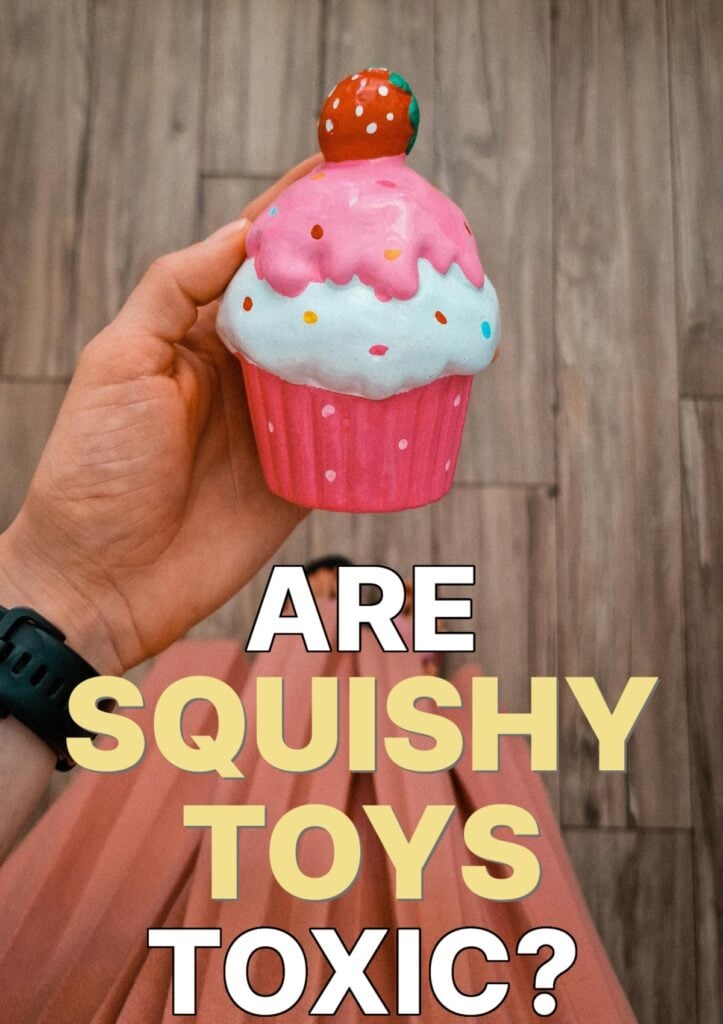
They’re marketed as sensory toys that can help kids relax, focus, or deal with big feelings. And they’ve also become highly collectible—meaning kids can’t seem to get enough of them.
No parent likes being a fun-hater. But if you’ve ever stopped to wonder whether squishies are actually safe, you’re not alone.
Are Squishy Toys Toxic?
“Squishes are everywhere and although I’ve stopped purchasing them they still passively find a way into our home, car… my purse,” explains Caitlin Ultimo. “My daughter has received them in party favor bags, as incentive prizes at school or the dentist, they’re also the low token prize at a lot of arcades. They are hard to avoid. But you can definitely spot the ones that are lower quality and more likely to pop and leak. Typically I’ll allow her play with them a little and before the end of the night they find their way to the trash.”
Some parents and grandparents have shared that these types of toys can split or tear, revealing a very sticky, gel-like substance inside. In a few cases, contact with that material has caused irritation to a child’s skin or eyes.
Others notice a strong chemical smell, or a texture that feels a little off. And then there’s the bigger picture: how quickly these small, trendy toys can pile up.
If you’ve found yourself questioning any of this, you’re in the right place. Here’s what to know about what these toys are made of, how they’re used, and what actually matters when it comes to your child’s exposure.
Why Do Squishies Smell So Strong?
Most squishy toys are made from a type of soft plastic foam, often polyurethane. To make them more appealing, manufacturers add dyes, coatings, and sometimes fragrance.
That signature smell? It can be a sign that the materials are releasing chemicals into the air. This process is known as off-gassing. We’ve covered it in many contexts like EVA foam toys, furniture, new mattresses, or freshly painted rooms.
What That Smell Might Mean
When a product off-gasses, it releases tiny particles or VOCs (volatile organic compounds) into the surrounding air. This tends to be strongest:
- when a product is new
- in warm or enclosed spaces (like car seats in a hot car)
- when it’s kept close to the body (like on a pillow or in bed)
In most everyday situations, exposure is low. But with toys like squishies—especially ones with a strong scent—it’s reasonable to pause and consider how often and how closely they’re being used.
Not All Squishy Toys Are the Same
As I started looking into this, I realized there isn’t just one type of “squishy toy” and that’s part of what makes this confusing for parents.
Some are made from soft foam (like the scented, slow-rising versions). Others are made from stretchy, rubber-like materials such as thermoplastic rubber (TPR). And some, like popular gel-filled stress toys such as NeeDoh, have a soft outer layer with a gel-like filling inside.
They may all feel similar in your child’s hands, but they behave differently when it comes to exposure:
- Foam squishies are more likely to have that strong scent and raise questions about off-gassing
- Rubber-like (TPR) toys tend to have less odor but can vary in quality depending on how they’re made
- Gel-filled toys usually don’t smell as strong, but bring up a different consideration: what happens if they break or leak
Caitlin also shares, “One time my daughter received one at school in a favor bag. It had leaked before we even left the parking lot. She actually asked me if it was toxic. The neon green color might had aided in her assumption, but in the moment I honestly didn’t have an answer!”
As annoying as it can be, this is why parents are forced to research so much of what ends up in their child’s hands.
What Research Has Found
Testing by the Danish Environmental Protection Agency looked at several squishy-style toys and found that some released higher levels of certain VOCs, including substances commonly used in manufacturing foams and plastics. (source)
These findings raised concerns about prolonged exposure—particularly for children who might:
- handle them frequently
- keep several in their room
- or sleep with them nearby
At the same time, the overall risk of lasting harm from occasional exposure was considered low. Like many environmental exposures, it’s less about a single moment and more about duration and proximity over time.
How Much Should Parents Worry?
You don’t need to panic or immediately throw everything away. But it is helpful to think in terms of small, meaningful action:
- A toy that’s played with occasionally is different from one that lives on a pillow all night
- One lightly scented item is different from a collection of strongly scented ones in a small room
- A brand-new toy will typically off-gas more than one that’s been aired out over time
And for other types of squishy toys (like gel-filled or rubbery ones), the question becomes less about air exposure and more about condition and durability. Inspect your child’s toys often to make sure they are intact, well-made, and used as intended.
If a toy smells strong enough to catch your attention or looks like it’s starting to break down, that’s a cue to take a closer look.
What We Do in Our Own Homes
Every family lands in a slightly different place. But if you’re looking for a balanced approach, here’s what our team does when it comes to plastic toys our kids really wanted:
- Let new squishy toys air out for a few days in a well-ventilated space
- Avoid keeping them in bed or near your child’s face for long periods
- Limit how many are stored in one room, especially smaller bedrooms
- Be cautious with products that have an especially strong or lingering scent
- Don’t leave them in the car where they can get hot and start to off-gas heavily
You don’t have to eliminate every modern toy. But you can reduce the exposures that add up over time.
A Note on Trendy Toys and Consumerism
Squishy toys are much like other toy trends. They show up quickly, feel irresistible for a while, and then fade into the bottom of the toy bin.
Many of these toys are inexpensive, mass-produced, and not especially durable. These short-lived toys might bring a burst of excitement, but aren’t made to be kept, repaired, or passed down. That doesn’t mean your child can’t enjoy them. But it can be helpful to consider how many we’re bringing into our homes and what they’re teaching our kids about overconsumption.
When toys are easy to collect and just as easy to discard, it can subtly send the message that there’s always something new to want, something more to add.
There’s value in slowing that cycle down. Choosing fewer, longer-lasting toys. Making space for creativity over accumulation. And noticing which things actually hold a child’s attention beyond the first few days.
One of our all-time most popular articles offers some great advice on slowing down and getting out of the “more” cycle: Want happier calmer kids? Simplify their world.
More on Safe Toys for Babies and Kids
These articles offer more advice and ideas about choosing safer toys and baby care items. And you can stay up to date with all the latest on natural parenting when you subscribe to Green Child Magazine.
Why and How to Choose Battery Free Toys
Is EVA Foam Toxic?
PVC in Toys
Eco-Friendly Gifts for Kids
Eco-Friendly Gifts for Babies
Are Battery Toys Bad for Babies?
How to Set Up a Montessori Playroom
How to Avoid Toxic Chemicals in Toys
Why Children Need Open-Ended Play